Importing dumbbells from China is the single most direct way to cut your cost of goods sold and build a defensible margin — but only if you understand the real numbers behind a factory quote. Most “guides” online stop at vague advice like “find a supplier on Alibaba.” This one gives you the actual specifications, MOQs, lead times, and carton dimensions used by a working dumbbell factory, so you can model your landed cost before you ever wire a deposit.
UnivFitness, a fitness equipment manufacturer in China, is used throughout as the concrete example. Every model number, material, weight, and trade term below comes from its live wholesale catalog — not from a generic template.
Step 1: Know exactly which dumbbell you’re buying
“Dumbbells” is not one product. The material and construction decide your price, your shipping weight, and which customer you can sell to. A factory catalog typically separates them like this (real UnivFitness models):
| Product | Model | Material | Weight range | Typical MOQ |
|---|---|---|---|---|
| Cast iron hex dumbbell | UV10601 | Cast iron | 2.5 / 5 / 7.5 … 50 kg | 1,000 pcs |
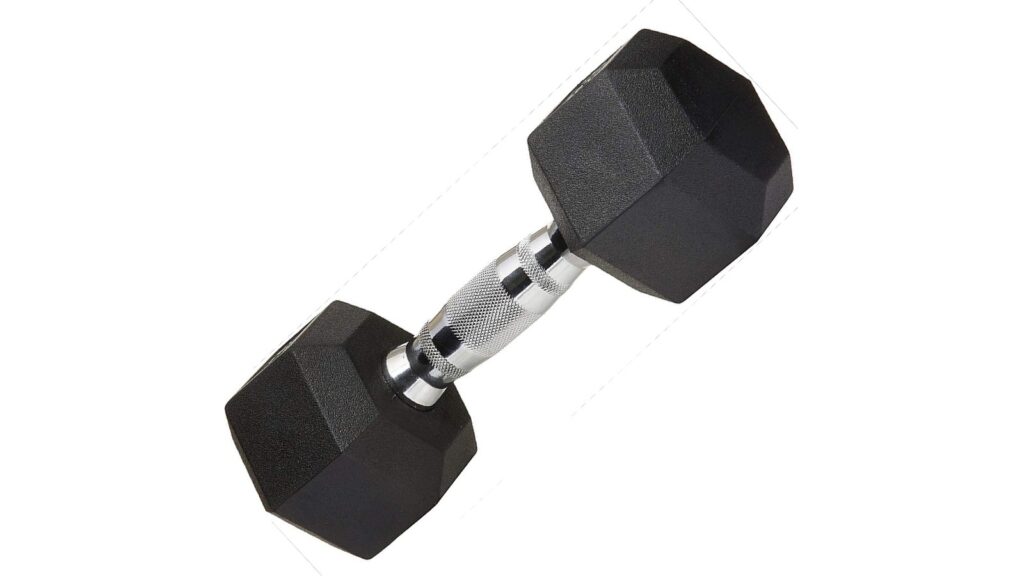
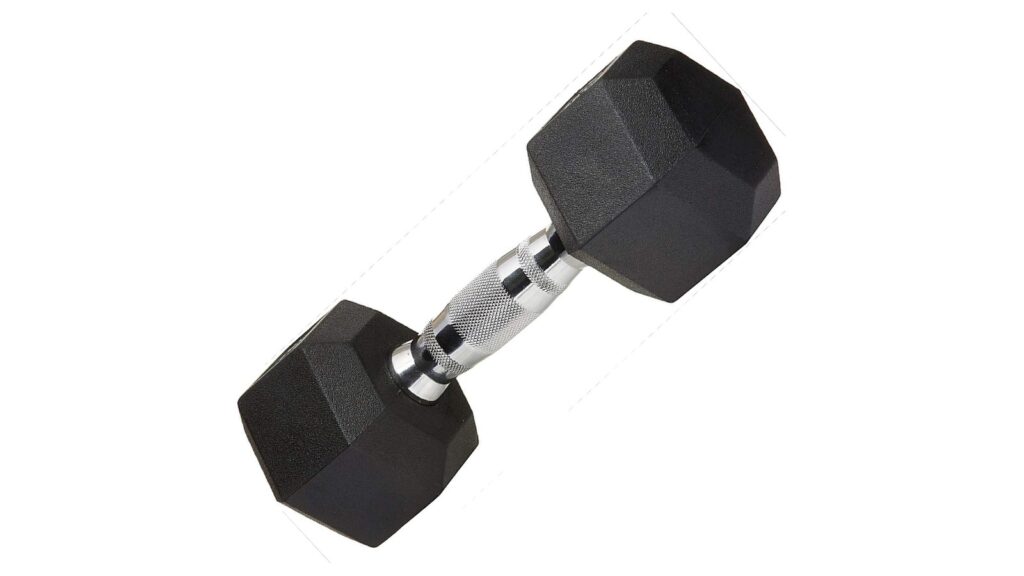
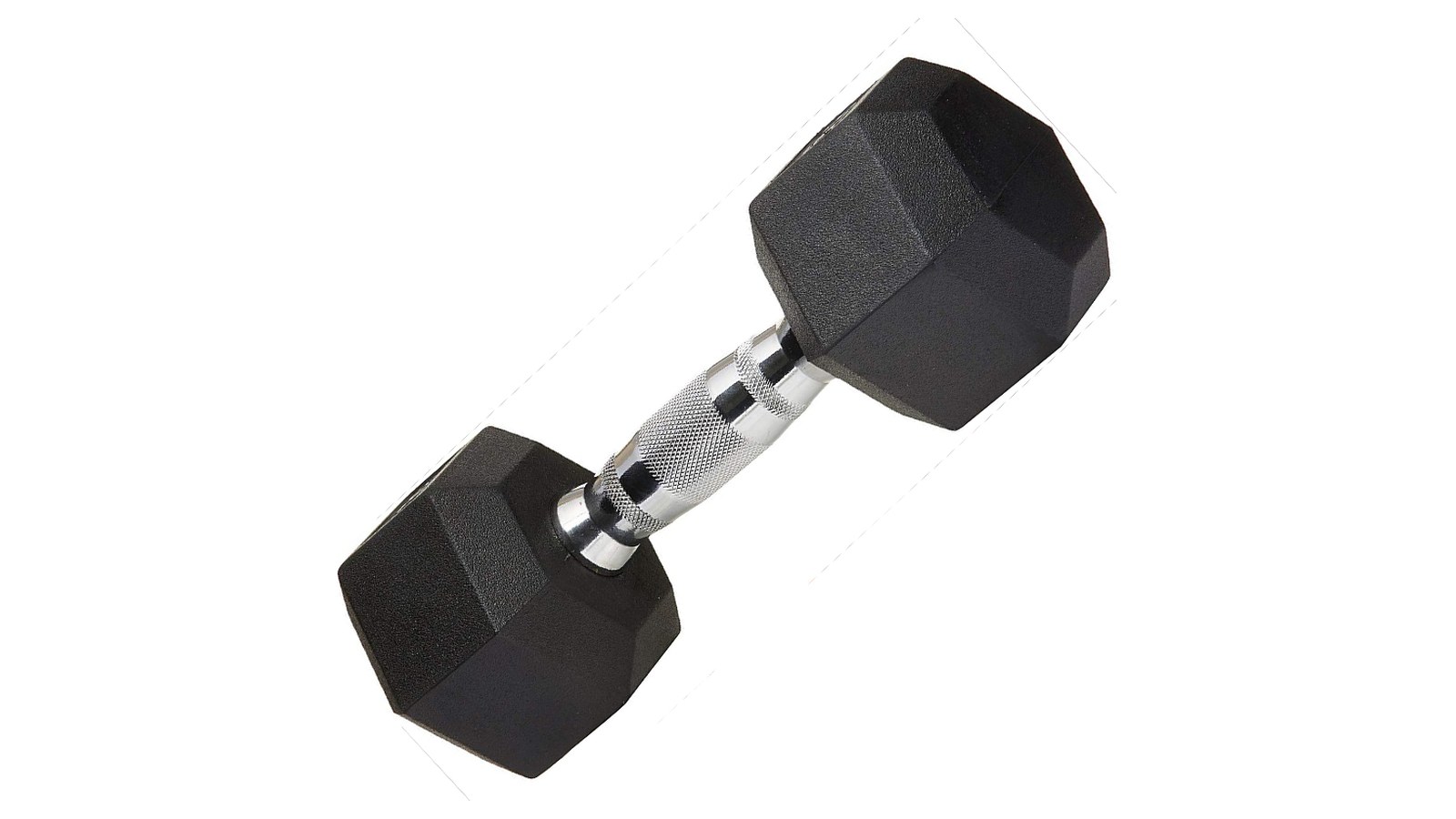
| Rubber hex dumbbell | UV10801 | Rubber + chromed steel handle | 2.5 / 5 / 7.5 … 50 kg | 1,000 pcs |
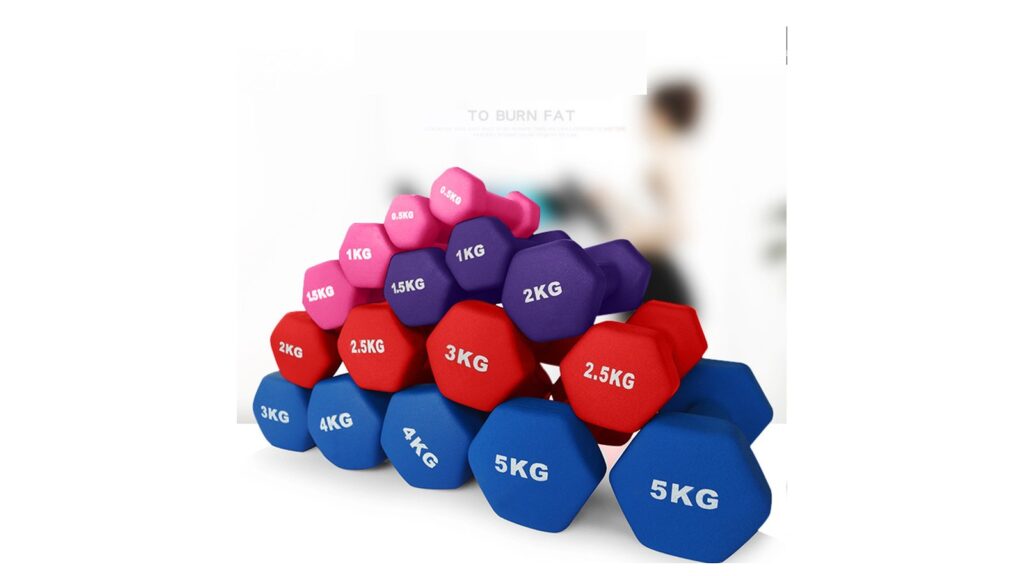
| Neoprene dumbbell (round head) | UV10201 | Vinyl + cast iron | 0.5 / 1 / 2 / 3 / 4 / 5 kg | 1,000 pcs |
| Neoprene dumbbell (hex head) | UV10208 | Neoprene + cast iron | 1 / 2 / 3 / 4 / 5 kg | 1,000 pcs |
| Vinyl dumbbell (hex head) | UV10108 | Vinyl + cast iron | 1 / 2 / 3 / 4 / 5 kg | 1,000 pcs |
| Plastic dumbbell (hex head) | UV10302 | PE + sand | 1 / 2 / 3 / 4 / 5 kg | 1,000 pcs |
| 10 kg black painted dumbbell set | UV11101 | Cast iron | 1.25 kg×2 + 2.5 kg×2, 25 mm × 350 mm chromed bar | 1,000 pcs |
Two things to notice. First, the rubber hex line (UV10801) is offered in three coating grades — rubber, TPU, and PEV — which changes both durability and price. Second, individual fixed dumbbells are normally quoted per kilogram, while boxed “sets” (a pair of dumbbells plus a bar and collars) are quoted per piece. Knowing the difference stops you from comparing a per-kg quote against a per-set quote and thinking you found a bargain.
Step 2: Understand the MOQ before you negotiate price
The minimum order quantity is the first real filter between a factory and a reseller who isn’t ready yet.
UnivFitness states “Wholesale & OEM Only — MOQ from 1,000 pcs” on its homepage, and its product pages break that down further:
- Dumbbells and barbells (individual or sets): 1,000 pcs per model — e.g. UV10601, UV10801, UV11101.
- Resistance bands and tubes: 1,000 pcs per model — e.g. the UV43101 latex power band.
- Neoprene kettlebells and some yoga accessories: 500 pcs per model — e.g. UV13101 (1–5 kg) and the UV61501 ab mat.
- Cork yoga mats: 1,004 pcs per model (the UV21108 cork + TPE mat).
The takeaway for a first-time importer: a full container is not required on day one. You can place a 500–1,000 piece trial order on a single model to validate quality and sell-through before committing to a 20-foot or 40-foot container. When a supplier refuses to quote below a container, that usually means you are talking to a trading company or a factory that does not want small-account business — both are useful signals.
Step 3: Know the lead time and payment terms (this is where cash-flow risk lives)
Factory production lead time and payment structure are the two terms that most often surprise new importers. The standard UnivFitness terms are:
- Lead time: 30 days after order confirmation.
- Payment: 30% advance deposit, 70% balance before shipment.
- Price term: FOB Shanghai.
- Samples: free samples, with the sample fee refunded against your bulk order.
The “30% deposit / 70% before shipment” split is the industry norm and actually protects you: you hold the largest payment until production is complete and ready to ship. Be wary of any supplier demanding 50%+ up front or 100% before production — it shifts all the risk onto you with no leverage left.
Step 4: Model your shipping cost from China with real carton data
The most common import mistake is budgeting on product price alone and ignoring freight. Under FOB Shanghai, the factory covers getting the goods to the port; you cover ocean freight, insurance, customs duty, and inland delivery. To estimate freight you need the carton volume (CBM), which real factories publish per product.
Two real examples from the UnivFitness catalog:
| Product | Qty per carton | Carton size (L×W×H) | Carton weight | Volume per unit |
|---|---|---|---|---|
| 10 kg black painted dumbbell set (UV11101) | 20 pcs | 101 × 87 × 98 cm | 11 kg | ~0.043 CBM/set |
| Latex power band (UV43101) | 5 pcs | 40 × 28 × 28 cm | 0.06 kg | ~0.0063 CBM/band |
The dumbbell set carton works out to roughly 0.86 CBM per 20-piece carton. Against a 40-foot container’s usable volume of about 55–58 CBM, that is on the order of 1,300+ sets per container — useful for building a quick landed-cost model. The resistance band carton, at 0.031 CBM, shows why accessories ship densely and cheaply: you can move tens of thousands of bands in a single container.
Dumbbells are dense and heavy, so for most markets the landed cost is dominated by weight (ocean freight is charged per container, not per kg, but heavy goods mean you fill a container by weight before you fill it by volume). Get a freight forwarder quote against the exact CBM and gross weight — never accept a supplier’s “estimated shipping included” figure without the carton breakdown behind it.
Step 5: Factory vs. trading company — and how to tell which you’re dealing with
This is the question behind the question in every “china fitness equipment supplier vs trading company” search. Both can be legitimate, but they have different economics:
- A factory owns the production lines. It can hold tighter quality control, offer real OEM/customization (custom logo, custom colors, custom packaging), and quote lower unit prices at scale. UnivFitness positions itself as a factory: it states “factory wholesale pricing,” offers “OEM / custom logo service,” and lists full per-product specifications — a signature of a manufacturer, not a middleman.
- A trading company buys from multiple factories and resells. It can be convenient for mixed, low-volume orders and for handling export paperwork, but you pay a margin, and customization is slower because it has to relay your spec to a third party.
How to verify you are talking to a factory: ask for the model-level specification sheet (materials, weight tolerance, finish, carton size — not just a price), request a sample with your logo, and ask for production-line or inspection photos. A factory answers these instantly; a trading company stalls or sends you back a catalog. A supplier that publishes a 1,000-pc MOQ, a 30-day lead time, and per-model SKUs (UV10601, UV10801, UV10201) is behaving like a manufacturer.
Step 6: Avoid scams with a five-point checklist
Importing from China is safe when you follow process. The scams are almost always avoidable with these checks:
- Verify the company, not the storefront. Confirm a real factory address and export license. Ask for business registration and a live video call of the production floor.
- Order a sample first. A free sample with a refundable fee (refunded on the bulk order) is the cheapest insurance you can buy. Check weight accuracy, finish, and packaging before committing.
- Demand inspection reports. UnivFitness states “inspection before and after production, with inspection reports for every order.” A factory that won’t provide a pre-shipment inspection report is one you should not wire money to.
- Never pay full amount up front. The 30% deposit / 70% before shipment structure keeps your risk bounded. Refuse 100% prepayment.
- Use escrow or a letter of credit for your first container. Until trust is established, structure payment so funds are released against shipping documents, not promises.
Step 7: Put it together — a realistic first order
A concrete first order looks like this: 1,000 pieces of the UV10801 rubber hex dumbbell across a few weights (say 5 kg, 7.5 kg, and 10 kg), FOB Shanghai, 30% deposit, production in 30 days, third-party inspection, balance paid before shipment, and LCL or a shared 20-foot container to your port. Land it, sell through, then scale to a full container with your own private-label logo — which is exactly the topic we cover in the private-label guide.
Bottom line: importing dumbbells from China is a numbers game, and the numbers are knowable. Confirm the model, the MOQ, the lead time, the payment split, and the real carton CBM — and you have removed most of the risk before the first box is loaded. For a factory-direct quotation on any of the models above, send an inquiry to lyle@univfitness.com or via the enquiry button on each product page.