Ask a novice buyer for “a set of dumbbells” and they’ll assume one product exists. Ask a distributor and they’ll ask you three questions back: what material, what weight range, and what’s the price point. The type of dumbbell you stock decides which customer buys it, how it ships, and whether it comes back as a warranty claim. This guide breaks down the main types using the actual models and specifications from UnivFitness’s wholesale catalog, so you can make the decision with real data instead of guesswork.
The four materials that matter (plus two budget alternates)
At the factory level, a dumbbell is defined by its core material and its coating. Here are the real models:
| Type | Model | Core material | Coating | Weight range |
|---|---|---|---|---|
| Cast iron hex dumbbell | UV10601 | Cast iron | None (raw/painted) | 2.5–50 kg |
| Rubber hex dumbbell | UV10801 | Cast iron | Rubber / TPU / PEV | 2.5–50 kg |
| Neoprene dumbbell (round head) | UV10201 | Cast iron | Vinyl | 0.5–5 kg |
| Neoprene dumbbell (hex head) | UV10208 | Cast iron | Neoprene | 1–5 kg |
| Vinyl dumbbell (hex head) | UV10108 | Cast iron | Vinyl | 1–5 kg |
| Plastic dumbbell (hex head) | UV10302 | PE + sand | None | 1–5 kg |
Cast iron hex dumbbells — the workhorse
The UV10601 cast iron hex dumbbell runs from 2.5 kg up to 50 kg in the standard 2.5 kg steps. It is a solid cast-iron head with no coating, which gives it three defining characteristics.
Pros: it is the cheapest heavy dumbbell per kilogram, it is nearly indestructible, and the hexagonal head stops it rolling on the floor. For a commercial gym or a serious home lifter who cares about price-per-kilo and durability above all else, cast iron is the default.
Cons: bare cast iron will rust if stored damp, it is loud and unforgiving on floors when dropped, and there is no coating to absorb impact. It is also the heaviest-feeling option in the hand, which is exactly why the coating alternatives below exist.
Who stocks it: gym owners and value-focused distributors who sell heavy, single-weight pieces and don’t need color or soft-touch appeal.
Rubber hex dumbbells — the commercial standard
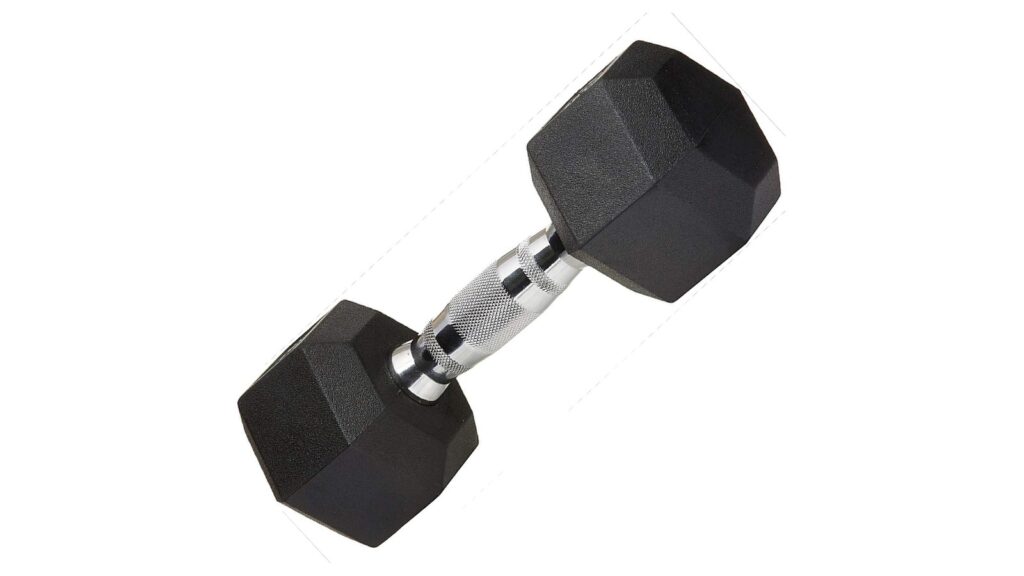
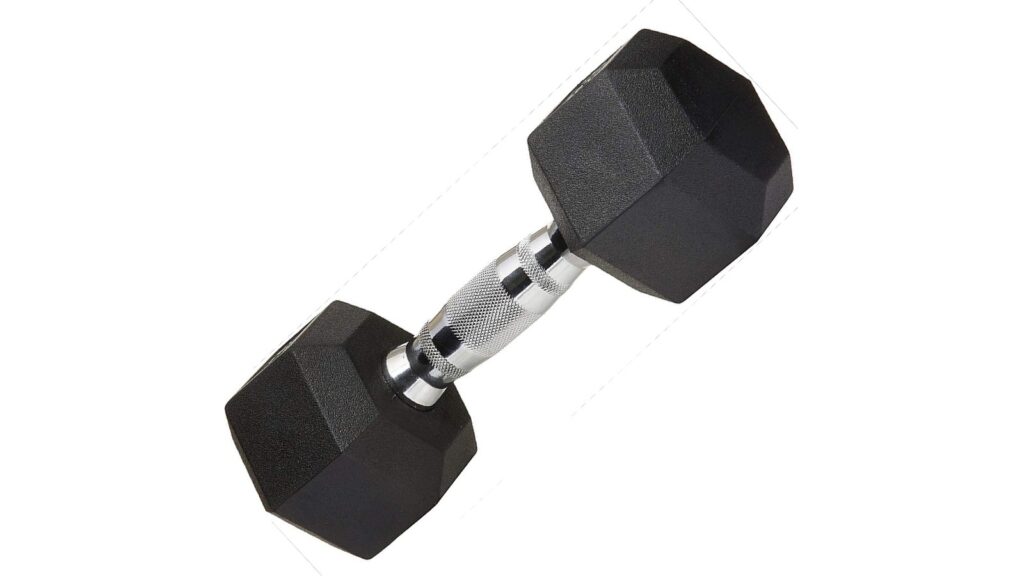
The UV10801 rubber hex dumbbell is cast iron wrapped in a rubber head, with a chromed steel handle, and it is offered in three coating grades: rubber, TPU, and PEV. This is the dumbbell you see in most commercial gyms and the one serious home buyers aspire to own.
Pros: the rubber coating protects floors and the dumbbell itself, absorbs impact and noise, and resists rust. The hex shape prevents rolling, and the chromed handle gives a clean grip. The three coating options let you trade price against durability — TPU and PEV are premium coatings that resist cracking and odor better than standard rubber, making them the choice for high-traffic gyms and for buyers who store equipment in sunlight or heat.
Cons: rubber hex heads are bulky for a given weight, and low-grade rubber can develop a distinct smell or crack over time — which is precisely why the coating grade matters and why you should specify it in your order rather than accepting “rubber” as a generic.
Who stocks it: this is the best all-round seller for distributors — it sits in the middle of the price curve, appeals to both commercial and premium home buyers, and has strong reorder potential.
Neoprene (and vinyl) dumbbells — the home and studio line
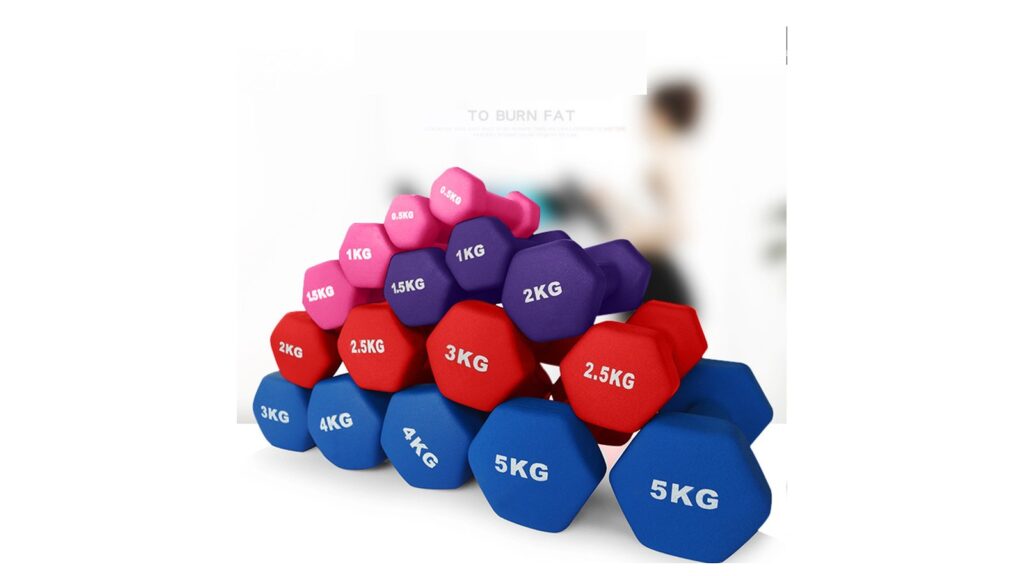
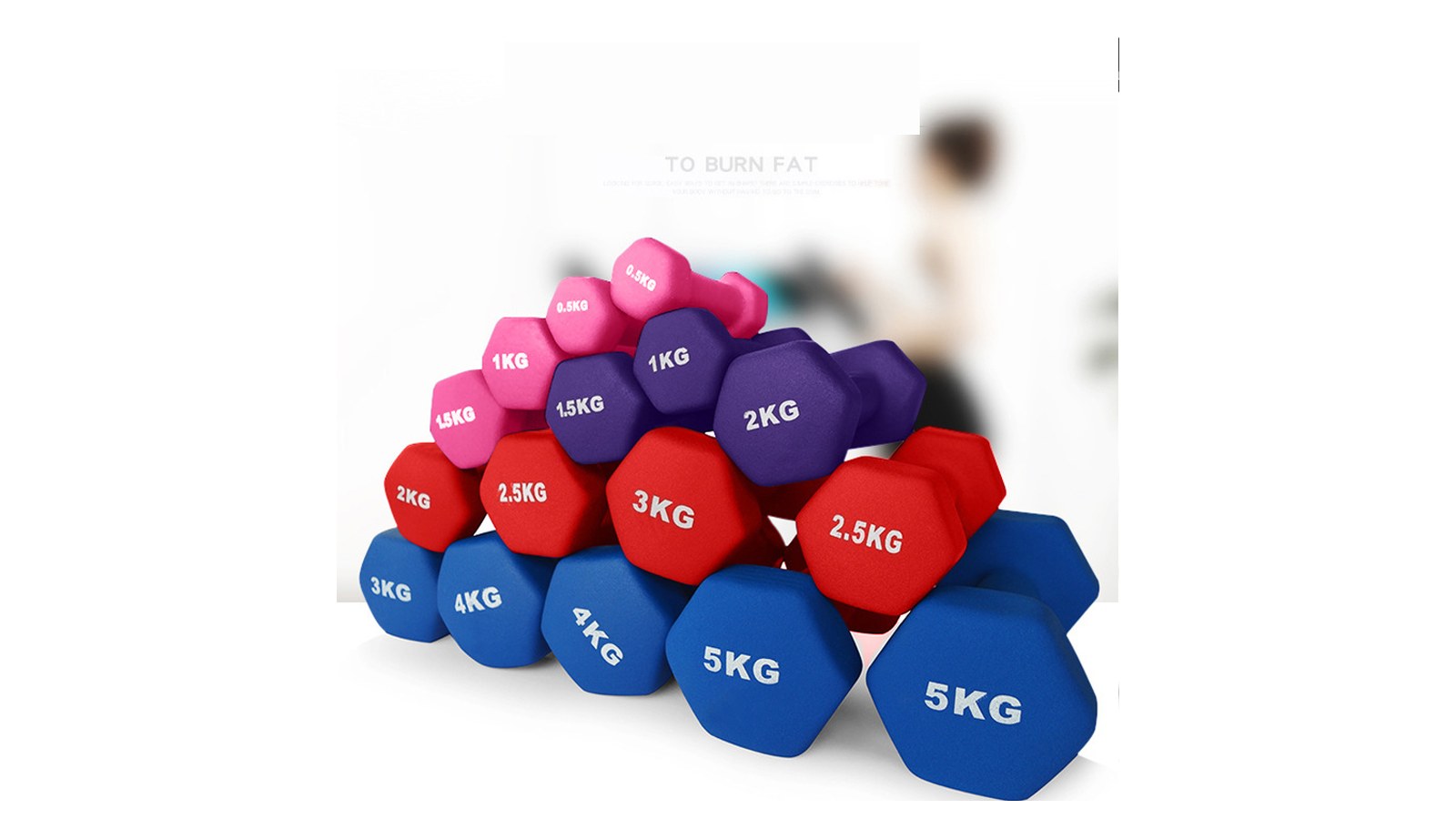
The UV10201 round-head and UV10208 hex-head neoprene dumbbells are cast-iron cores coated in soft vinyl or neoprene, in light weights from 0.5 kg up to 5 kg. Despite the name, note the specification: the “neoprene” round-head UV10201 lists its material as vinyl + cast iron, while the hex-head UV10208 is true neoprene. Both serve the same market.
Pros: soft-touch, non-slip, color-coded, floor-friendly, and quiet. The light weight range and comfortable grip make them ideal for beginners, home workouts, aerobics, group classes, and rehabilitation. They are also the easiest to brand — the color-coded heads take logo printing well.
Cons: the weight range is limited (up to 5 kg), so they are not a progression tool for strength training, and the soft coating can tear if abused. They are also more expensive per kilogram than raw cast iron.
Who stocks it: home-fitness retailers, Amazon sellers, and studio/group-training suppliers. If your customer base is beginners and home users, neoprene/vinyl is your volume line.
Two budget alternates you should know
- Vinyl hex dumbbells (UV10108): cast iron + vinyl, 1–5 kg. Similar look and feel to neoprene but often slightly cheaper — a strong entry-price home product.
- Plastic hex dumbbells (UV10302): PE shell filled with sand, 1–5 kg. The cheapest option in the catalog. Fine for aerobics and light home use, but the sand core means they can’t be dropped hard and they lack the premium feel of cast iron. Use them for price-sensitive market segments only.
Beyond single dumbbells, the same materials appear in boxed sets — for example the UV11101 10 kg black painted (cast iron) set, the UV11302 rubber set, the UV11201 chromed set, and the UV11402 cement set. Sets are the retail-friendly, giftable format that moves well in home-gym and first-time-buyer markets.
The side-by-side decision table
| Criterion | Cast iron hex (UV10601) | Rubber hex (UV10801) | Neoprene/vinyl (UV10201 / UV10208) |
|---|---|---|---|
| Weight range | 2.5–50 kg | 2.5–50 kg | 0.5–5 kg |
| Price per kg | Lowest | Mid | Higher |
| Floor & noise protection | None | High | High |
| Rust resistance | Low (paint optional) | High | High |
| Drop tolerance | Low | High | Medium |
| Best customer | Commercial gym, serious lifter | Commercial + premium home | Home, studio, beginner |
| Branding / color | Limited | Good | Excellent |
Commercial vs. home: which to stock
This is the “commercial vs home gym equipment” decision in one sentence: stock heavy, coated, durable lines for commercial buyers, and light, colorful, affordable lines for home buyers.
- A gym owner buying in bulk wants the UV10801 rubber hex (durability, floor protection, 2.5–50 kg range) and will reorder as their floor expands.
- A home retailer wants the UV10201/UV10208 neoprene line and boxed sets — smaller, branded, color-coded, and shippable in consumer parcels.
- A distributor who wants both ends of the market stocks rubber hex as the anchor and neoprene as the volume accessory.
Quality checks before you commit
Whichever type you choose, verify these points on your sample and on the factory’s inspection report — UnivFitness provides inspection before and after production, with reports for every order:
- Weight tolerance — each dumbbell should be within a consistent, stated tolerance of its marked weight.
- Coating integrity — no bubbles, cracks, or peeling on rubber/vinyl/neoprene.
- Handle finish — chromed handles straight and clean; knurling or grip texture consistent.
- Hex geometry — flat, even sides so the dumbbell sits stable and doesn’t roll.
- Label/logo placement — legible and correctly positioned, especially on branded runs.
Bottom line
There is no single “best” dumbbell — there is the right dumbbell for the customer you’re selling to. Cast iron hex for the price-sensitive lifter, rubber hex for the commercial standard, and neoprene/vinyl for the home and studio volume market. Match the material to the buyer, verify the coating grade and weight tolerance, and you stock a line that moves instead of sitting on the shelf. For model specifications and factory-direct quotes on UV10601, UV10801, UV10201, and the full dumbbell range, contact lyle@univfitness.com or use the enquiry button on each product page.