Private labeling is how a small Amazon seller becomes a brand, and how an importer turns a commodity dumbbell into a repeatable asset. The mechanics are simpler than most people think: pick a product, put your logo and packaging on it, and order enough to hit the factory’s OEM minimum. The hard part is the details — and this guide covers those details using the actual OEM terms, logo methods, packaging, and MOQs of a working fitness equipment factory, UnivFitness.
Why private label beats reselling a generic brand
When you resell someone else’s brand, you compete on price and the customer’s loyalty belongs to them. When you private label, three things change:
- You own the customer. Your logo, your packaging, your warranty — every repeat order comes back to you.
- You stop competing on price. A logoed, packaged product commands a premium over an identical unbranded one.
- You build a sellable asset. An established brand with sales history is worth far more than an Amazon account full of generic SKUs.
The catch is that you need a factory that actually does OEM — not a trader who re-buys finished goods. The giveaway is in the catalog. A real OEM factory lists customization as a first-class feature on every product, and specifies how your logo gets applied.
Step 1: Pick the right product line to start with
Don’t try to brand everything on day one. Start with one product line that matches your budget and your audience. These are the private-label-friendly lines UnivFitness manufactures, with real models:
| Product line | Example models | What makes it a good first brand product |
|---|---|---|
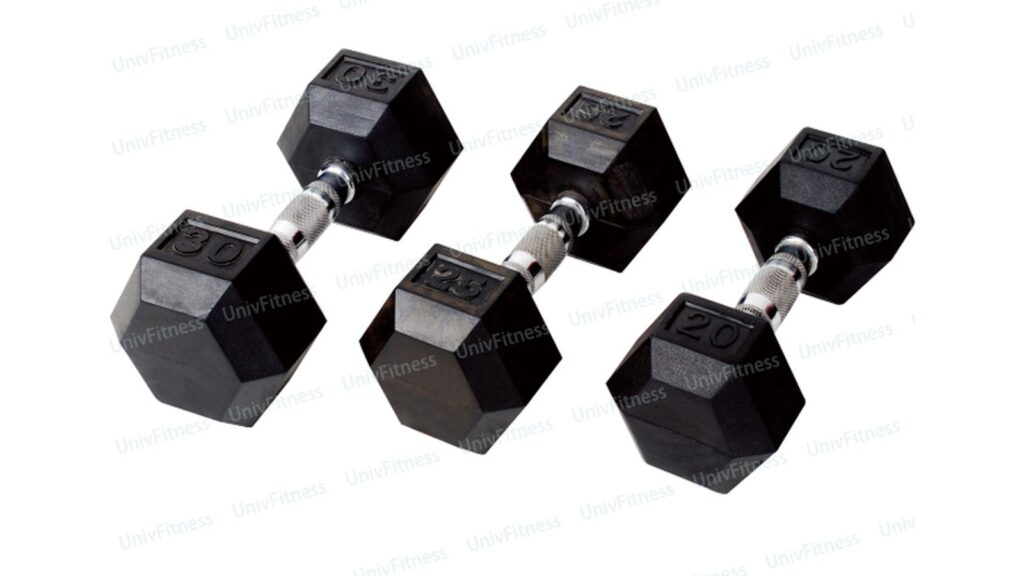
| Fixed dumbbells | UV10601 (cast iron hex), UV10801 (rubber hex), UV10201 / UV10208 (neoprene) | High perceived value, easy to brand, strong reorder cycle |
| Dumbbell & barbell sets | UV11101 (10 kg black painted set), UV11302 (rubber set) | Retail-friendly boxed product, strong gift/first-set market |
| Yoga mats | UV21108 (cork + TPE), UV61501 (PVC ab mat), EVA mats (UV20801–20805) | High-margin, light to ship, huge volume potential |
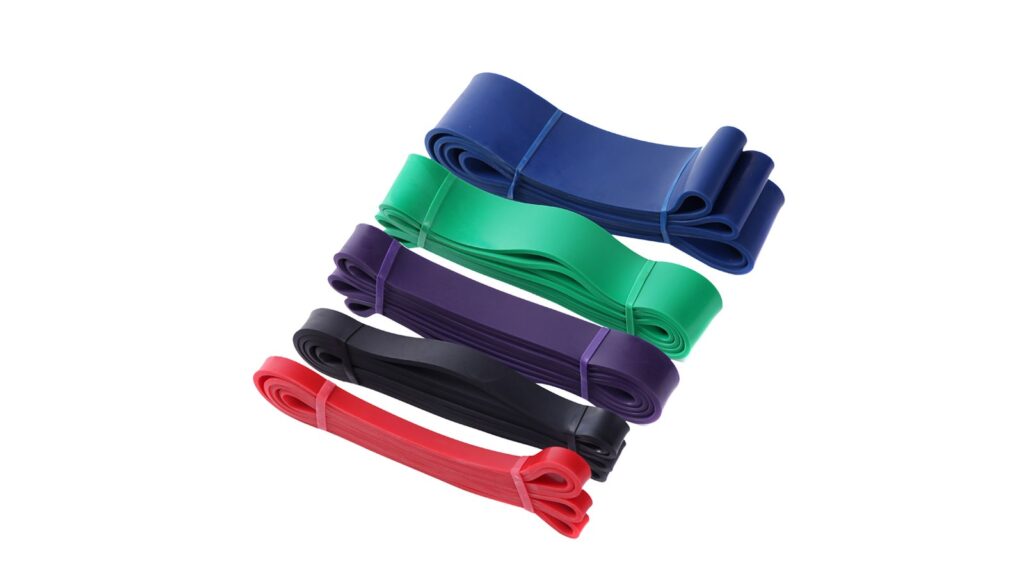
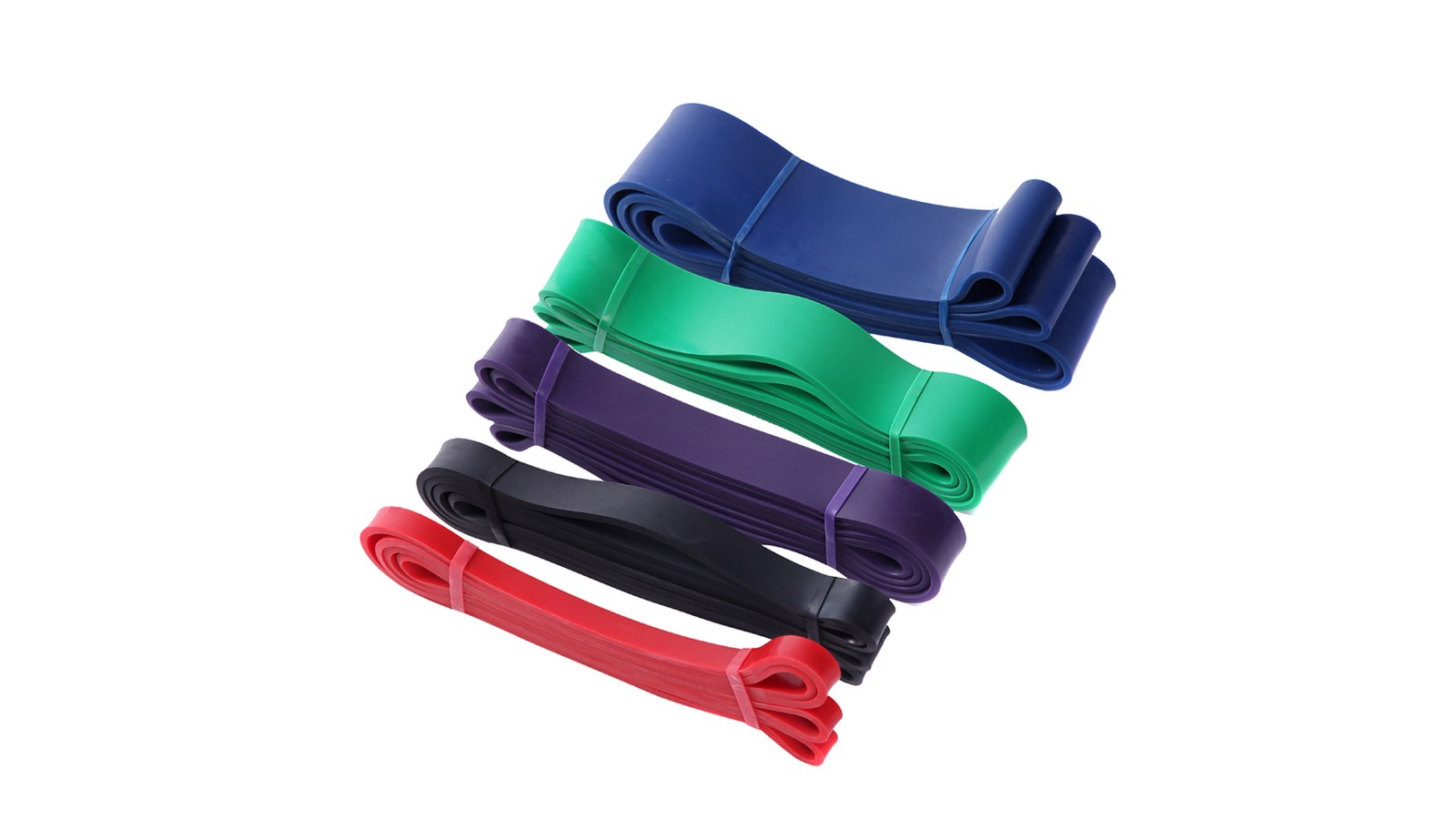
| Resistance bands & tubes | UV43101 (latex power band, 10 levels), UV42903 (latex loop) | Very low unit cost, easy to bundle, fast sell-through |
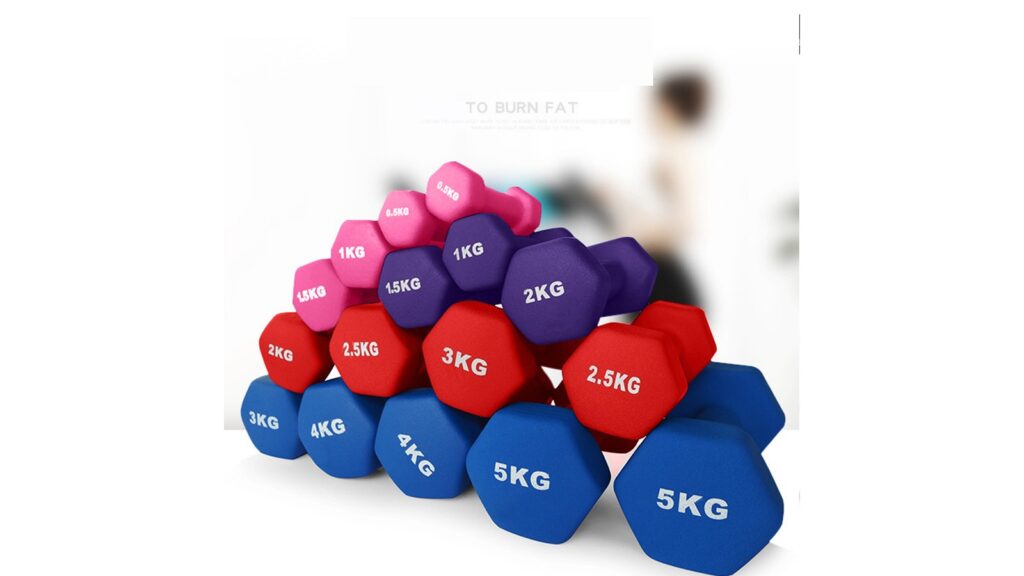
| Neoprene kettlebells | UV13101 (1–5 kg), UV13301 (2–10 kg) | Trendy, color-coded, strong home-fitness demographic |
A smart first move is a light, low-MOQ, high-margin accessory (yoga mats or resistance bands) to validate your brand and your logistics, then expand into dumbbells once you have cash flow and customer trust.
Step 2: Understand your logo options (this matters more than you think)
How your logo is applied changes the tooling cost, the durability, and the minimum order. UnivFitness specifies the logo method per product, and there are two main options:
- Mould logo (embossed/cast-in): used on cast-iron and painted products like the UV11101 black painted dumbbell set, whose spec lists “Logo: mould.” The logo is cast or pressed into the head, so it is permanent and premium-looking — but it requires a mould, which suits larger runs.
- 1C printing (one-color print): used on latex and soft-surface products like the UV43101 power band and the UV61501 ab mat, whose specs list “Logo: 1C printing.” This is screen-printed or pad-printed directly onto the product — lower setup cost and ideal for smaller runs and colorful accessories.
Ask your factory which method applies to your chosen product before you design your logo. A multi-color, fine-detail logo on a mould product may be impossible or expensive, while the same logo prints cheaply on a band or mat. A good factory will guide you; a bad one will take your file and bill you for rework later.
Step 3: Design your custom packaging
Packaging is where most new brands leave money on the table. A factory that does OEM should offer packaging options beyond a plain brown box. Real packaging formats from the UnivFitness catalog:
| Product | Packaging format | Notes |
|---|---|---|
| Dumbbell sets (UV11101) | Printed carton, 20 pcs/box, 101×87×98 cm | Retail-ready box, can carry your branding |
| Latex power band (UV43101) | Color card, 5 pcs/box | Compact hangable card — great for retail pegs |
| PVC ab mat (UV61501) | PP bag, 50 pcs/bag | Lightweight, cost-efficient |
| Cork + TPE yoga mat (UV21108) | Color poster, 84 pcs/box | Rolled mat with branded wrap |
Your packaging should do three jobs: protect the product, carry your brand, and include the information your market requires (weight, material, care, and any compliance marks for your destination country). Give the factory your die-line and artwork early — packaging lead time runs in parallel with production and is a common cause of delay.
Step 4: Know the OEM MOQ before you invest in branding
Customization usually sits on top of the base MOQ. The real numbers from UnivFitness:
- Dumbbells / barbells / resistance bands: 1,000 pcs per model.
- Neoprene kettlebells / some yoga accessories: 500 pcs per model.
- Cork yoga mats: 1,004 pcs per model.
This is the number to anchor your entire business plan on. If your target price and sell-through can’t move 1,000 dumbbells within a reasonable window, start with a 500-pc kettlebell line or a lower-cost band/mat line instead of forcing a dumbbell brand. The MOQ is not a barrier — it is a sizing signal that tells you which product fits your current stage.
Step 5: Validate with a sample before you commit
Never order 1,000 units of a logoed product you have only seen in a photo. UnivFitness offers free samples with the sample fee refunded against your bulk order, which is the standard you should insist on. When your sample arrives, check:
- Weight accuracy — a “10 kg” set should be within tolerance, not 9.4 kg.
- Finish and color — is the paint even, the rubber coating consistent, the print crisp?
- Your logo — is it straight, legible, and in the right position?
- Packaging — does the carton/card look retail-ready and survive shipping?
Samples are also your test of the factory’s communication. If they are slow or sloppy on a one-piece sample, they will be worse on a container.
Step 6: Structure the order — trial run to container
The factory terms that make scaling possible are already standard at UnivFitness:
- Payment: 30% deposit, 70% before shipment.
- Lead time: 30 days.
- Price term: FOB Shanghai.
That 30/70 split means you fund production with 30%, then settle the balance when goods are ready — a structure that keeps your cash flow healthy and your risk bounded. Start with one model at MOQ as a trial order, sell it through, collect reviews and repeat-purchase data, then roll those profits into a full container across multiple models.
Step 7: What it actually costs (and where the margin is)
Using real catalog pricing as a reference point: a 10 kg black painted dumbbell set (UV11101) lists around $10.94 FOB, a 10 kg rubber set (UV11302) around $11.91, a 10 kg cement set (UV11402) around $4.53, and a latex power band (UV43101) around $1.13. Add ocean freight, duty, and fulfillment, and you can still land a branded dumbbell set in most Western markets at a landed cost that leaves room for a 2.5–4× retail markup. The margin is not in buying the cheapest set — it is in the branding, packaging, and trust that let you price above commodity level.
Your first move
Pick one product line. Confirm its MOQ and logo method. Order a sample with your logo. Validate it. Then place a trial order and build from there. UnivFitness is a factory-direct OEM manufacturer for exactly this path — dumbbells, yoga mats, resistance bands, kettlebells, and full-range fitness accessories with custom logo and packaging. To get model specifications and a private-label quotation, contact lyle@univfitness.com or use the enquiry button on any product page.