When you import fitness equipment for resale, the price on the quotation is only half the story. The other half is paperwork: the certificates, test reports, and compliance declarations that decide whether your container clears customs, whether your products can legally sit on a shelf, and whether your business survives a product-liability claim.
For an importer or private-label brand, certification is not a “nice to have” from the factory. It is the single most common reason a shipment is delayed at the port, a listing is pulled by a marketplace, or a distributor refuses to sign.
This guide explains the certificates and standards that actually matter for dumbbells, yoga mats, resistance bands, benches, and strength machines — and how to ask your factory for the right paperwork before you pay a deposit.
Why certification matters more than the unit price
Three practical reasons importers lose money on un-certified fitness equipment:
- Customs and market access. The EU requires a CE mark on most fitness products. Products without valid technical documentation can be held, re-exported, or destroyed. Australia and the UK have their own marks (RCM and UKCA).
- Marketplace and retail compliance. Amazon, eBay, and EU/UK retailers increasingly require a Declaration of Conformity, test reports, or a responsible person before you can list.
- Liability. If a dumbbell head detaches or a bench collapses, the importer is treated as the manufacturer in many jurisdictions. Without evidence of conformity to a recognised standard, you carry the liability alone.
A factory that “understands” compliance will give you the technical file and test data. A trading company that only understands price will give you a photo of a CE logo and hope you don’t ask questions.
What the common marks actually mean
CE marking — a declaration, not a certificate
The CE mark is a manufacturer’s self-declaration that a product meets all applicable EU requirements. It is not a “quality seal” and it is not issued by a third party for most fitness products.
For typical fitness equipment, the requirements come from:
- The General Product Safety Regulation (GPSR) — the EU’s baseline safety requirement for consumer products (it replaced the older General Product Safety Directive).
- EN ISO 20957 (formerly EN 957) — the harmonised standard for stationary training equipment, used to demonstrate safety.
- For motorised machines (treadmills, some massage tools): the Low Voltage Directive and EMC Directive.
- For chemicals in coatings, foam, and grips: REACH and, for electronics, RoHS.
A legitimate CE mark is backed by a Technical File and a Declaration of Conformity signed by the manufacturer or importer. If a factory can only show you a printed logo — with no test report and no declaration — that mark is decorative, not legal.
⚠️ CE vs “China Export” mark. Some suppliers print a look-alike logo that stands for “China Export,” not “Conformité Européenne.” The difference is often in the letter spacing and proportion, and — more reliably — in whether any documentation exists at all. A real CE mark always has a paper trail.
ISO 9001 — quality management, not product safety
ISO 9001 is often confused with a product certificate. It is actually a factory management-system certification: it certifies that the factory has documented processes for quality control, traceability, and continuous improvement. It does not certify that a specific dumbbell or bench is safe.
For importers, ISO 9001 is still a useful signal — it means the factory has an audit trail, which tends to translate into more consistent production and fewer hidden defects. But it is a complement to product-level standards, never a substitute for them.
EN ISO 20957 / EN 957: the standard behind “Class S” and “Class H”
If you stock commercial strength machines, benches, or cardio equipment, this is the standard you need to know.
EN 957 was the long-standing European standard for “stationary training equipment.” It has been progressively replaced and re-published under the international designation EN ISO 20957. When a factory quotes “EN 957” or “EN ISO 20957,” they are referring to the same family of requirements — the newer documents carry the ISO 20957 numbering.
The series is split into parts by equipment type:
- Part 1 — general safety requirements and test methods (applies to all).
- Part 2 — strength training equipment.
- Part 4 — strength training benches.
- Part 5 — pedal crank training equipment (exercise bikes).
- Part 6 — treadmills.
- Part 7 — rowing machines.
- Part 8 — steppers and climbers.
- Part 9 — elliptical trainers.
- Part 10 — exercise bicycles with a fixed wheel.
The classes: S vs H (and A and I)
The standard divides equipment into use classes, which tell you how hard the machine was designed and tested to be used:
| Class | Meaning | Typical buyer |
|---|---|---|
| A | Accuracy class — high precision, for measurement or medical use | Rehabilitation and clinical settings |
| S | Studio class — commercial/professional use | Gyms, studios, hotels, supervised facilities |
| H | Home class — domestic, light-duty use | Consumer retail, home users |
| I | Inclusive class — for special populations | Rehab and inclusive training |
The practical takeaway: Class S (studio/commercial) equipment is tested to a higher duty cycle and load than Class H (home). If you market a machine as “commercial gym equipment” but it was only tested to Class H, you are inviting warranty returns, early wear, and liability exposure. Conversely, paying for Class S on a product you will only sell to home users adds cost without benefit.
Always ask the factory to confirm the exact class and part number tested — for example, “EN ISO 20957-1 Class S” — and ask for the test report, not just the claim.
Which standards apply to which products
Different UnivFitness categories carry different compliance priorities. This is a general orientation, not a substitute for a compliance review with your own lab or consultant.
| Product category | Example models (UnivFitness) | Typical compliance focus |
|---|---|---|
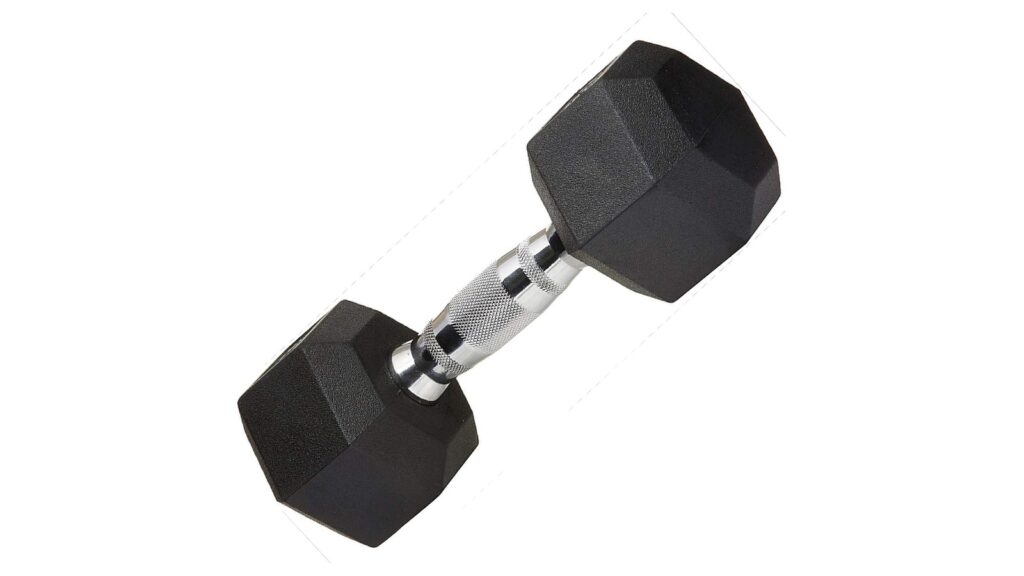
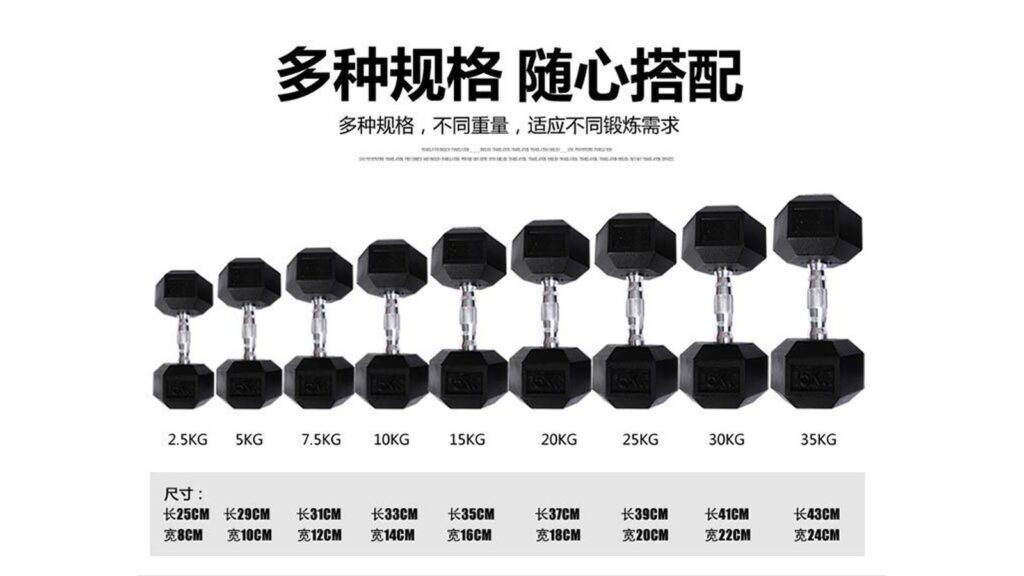
| Cast iron & rubber hex dumbbells | UV10601 (2.5–50 kg), UV10801 (rubber/TPU/PEV coated) | General product safety, weight accuracy tolerance, coating chemicals (REACH) |
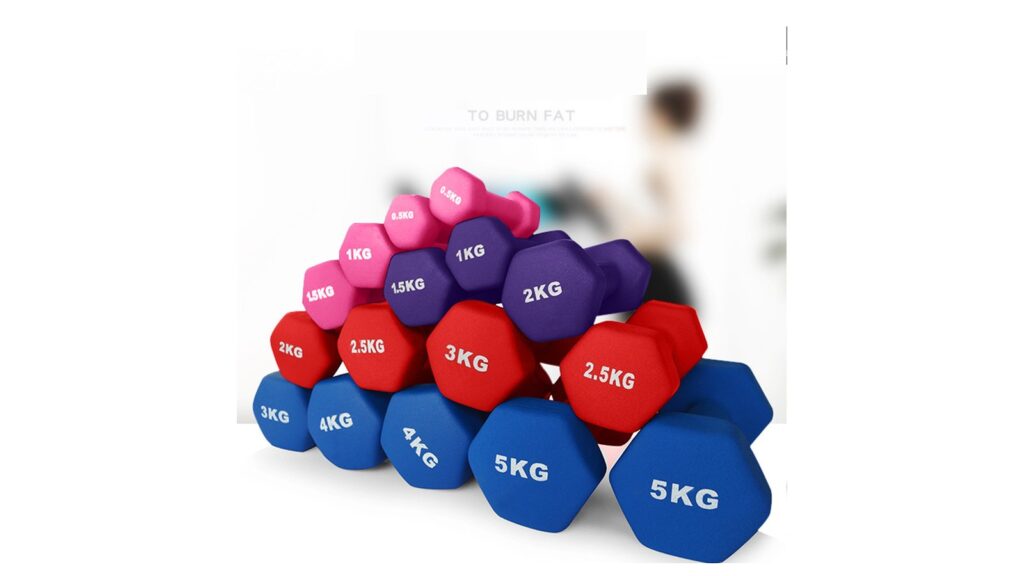
| Neoprene & vinyl dumbbells | UV10201 (0.5–5 kg), UV10108 (1–5 kg) | Chemical limits in coating (REACH), general safety |
| Kettlebells | UV12301/UV12302 cast iron + vinyl (4–32 kg); UV13101 neoprene (1–5 kg) | Load integrity of the handle, coating chemicals |
| Yoga mats (TPE/NBR/PVC) | UV21001 TPE, UV20901 NBR, UV20701 PVC | REACH/SVHC, phthalate and heavy-metal limits, flammability where required |
| Resistance bands & tubes | UV43101 latex power band, UV42903 latex loop, UV43002 tube | Latex content (allergen disclosure), REACH, tensile integrity |
| Benches & strength machines | UV81241 45° preacher bench, UV81240 45° dip | EN ISO 20957-4 (benches) / -2 (strength), structural load tests |
| Cable & multi-station machines | UV81313 crossover jungle, UV81321 5-station, UV81316 8-station | EN ISO 20957-2, load-bearing weld and cable safety |
Free weights such as dumbbells and kettlebells do not fall under EN ISO 20957 (that standard covers stationary machines). They rely on general product safety, weight accuracy tolerance, and material compliance. Benches and machines are the products where the EN ISO 20957 class really matters.
The three documents you should always request
Before you send a deposit, ask the factory for:
- Test report — from an accredited lab (SGS, TÜV, BV, Intertek, or a CNAS-accredited Chinese lab). The report must name the product model, the standard and part, and the test date.
- Declaration of Conformity (DoC) — signed by the manufacturer (or by you, as the EU importer, where you take that role).
- Technical file — drawings, material specifications, and the test data that support the DoC.
A credible factory can produce these in days. A factory that stalls, sends a blurry scan of someone else’s report, or says “no problem, we can print the logo” is telling you something important.
Weight accuracy is a separate but related check: reputable dumbbell and kettlebell factories hold a tolerance (commonly around ±2–3%). Ask for the tolerance and the QC measurement method, not just the nominal weight.
How UnivFitness approaches compliance
UnivFitness is a manufacturer and supplier in Nantong, Jiangsu, China, selling wholesale and OEM only across 13 categories — including 213 dumbbell and barbell models, 82 yoga mats, 43 resistance bands, and 772 strength and home-gym products.
We do not claim to hold every certificate for every market. What we do is give you a transparent production and QC trail you can verify:
- Inspection before and after production, with an inspection report issued for every order — so you have documented evidence of the checks performed, not just a promise.
- Material transparency — for coatings, foam, and latex parts (for example, the TPU/PEV/rubber coatings on the UV10801 hex dumbbell, or the TPE/NBR/PVC options across our yoga-mat line), we can confirm material composition so you can assess REACH and chemical compliance for your market.
- OEM with controlled processes — logo is applied by two documented methods: a cast “mould” logo for cast-iron and painted products, and 1C single-colour printing for latex and soft-surface products. Controlled processes are easier to document for your technical file than ad-hoc decoration.
- Samples before bulk — free samples are available, with the sample fee refunded on bulk orders, so you (or your lab) can inspect and test before committing to a container.
If your market requires a specific certificate or a specific standard class, tell us which standard, which part, and which class — for example “EN ISO 20957-1 Class S” — and we will confirm feasibility and documentation before you place the order.
UnivFitness trade terms at a glance
- Wholesale & OEM only — MOQ from 1,000 pcs (some categories such as kettlebells start from 500 pcs).
- Price term: FOB Shanghai.
- Lead time: 30 days.
- Payment: 30% advance, 70% before shipment.
- Samples: free, with sample fee refunded on bulk orders.
Prices below are indicative FOB wholesale prices and change with quantity, material, and specification.
| Example product | Model | Indicative FOB price |
|---|---|---|
| Cast iron hex dumbbell (2.5–50 kg) | UV10601 | on request (weight-dependent) |
| Rubber hex dumbbell (2.5–50 kg) | UV10801 | on request (weight-dependent) |
| Neoprene dumbbell (0.5–5 kg) | UV10201 | on request |
| Cast iron + vinyl kettlebell (4–32 kg) | UV12301 | on request |
| 10 kg black-painted dumbbell set | UV11101 | ~$10.94 |
| 10 kg rubber-hex set (star-lock collars) | UV11302 | ~$11.91 |
| 132 kg rubber Olympic barbell set | UV13705 | ~$180.47 |
| TPE yoga mat (183×61 cm) | UV21001 | on request |
| Cork + TPE yoga mat | UV21108 | ~$11.48 |
| Latex power band (10 resistance levels) | UV43101 | ~$1.13 |
| 45° preacher curl bench | UV81241 | ~$518 |
| Crossover and cable jungle | UV81313 | ~$2,200 |
A practical certification checklist for importers
- Confirm the target market first. EU, UK, USA, and Australia each have different marks and responsible-person rules. Certification is market-specific; don’t buy “one certificate for everywhere.”
- Map each SKU to a standard. Benches and machines → EN ISO 20957 (with the correct part and class). Free weights and mats → general safety + REACH/chemical + weight tolerance.
- Request the three documents — test report, DoC, technical file — and check the model numbers and dates match your order.
- Verify the report is real. The lab name and report number should be checkable. Don’t accept a cropped logo.
- Agree on the QC plan in writing. UnivFitness provides pre- and post-production inspection with a report per order — confirm what will be checked (dimensions, weight tolerance, weld/load tests) before production starts.
- Keep your own responsible-person / importer obligations in mind. In the EU, the importer often carries the DoC responsibility even when the factory supplies the test data.
Note on regulations: Standards and regulations change. This guide reflects general industry practice and is not legal advice; always confirm against the latest official standards and your local regulatory requirements before importing.
Get a compliance-confirmed quotation
If you are sourcing dumbbells, yoga mats, resistance bands, benches, or strength machines and need clarity on certification, contact UnivFitness with:
- The product and model number (for example “rubber hex dumbbell UV10801”).
- Your target market and quantity (MOQ from 1,000 pcs).
- The specific standard or certificate you need, if known.
Email lyle@univfitness.com or use the Enquiry button on any product page — our team replies within 24 hours on business days and will confirm what documentation we can support before you commit.