Kettlebells are one of the fastest-moving items in a fitness wholesale catalog — they sell to home users, group-fitness studios, CrossFit boxes, and commercial gyms at the same time, and they reorder in pairs and full sets. But “kettlebell” is not one SKU. The material, the weight system (kilograms vs pounds), and the coating decide which customer you reach and how the unit ships. This guide breaks down the kettlebell line a distributor should build, using the actual models and specifications from UnivFitness’s wholesale catalog.
Why kettlebells deserve a permanent slot in your catalog
Three reasons. First, kettlebells are a bridge product: the same light neoprene kettlebell that a home user buys for a HIIT routine is a different animal from the heavy cast-iron bell a CrossFit gym needs — but both come from the same factory and fill the same container. Second, they sell in progression sets, which raises average order value: a buyer rarely orders one 8 kg bell; they order 4 kg, 8 kg, 12 kg, and 16 kg. Third, they are dense and durable, which means low return rates and strong repeat business. For a reseller, kettlebells are a margin anchor, not a filler product.
The three kettlebell types to stock (and what each is for)
At the factory level, UnivFitness splits kettlebells into three construction families. Each has a different target customer:
| Type | Example models | Material | Weight range | Typical MOQ |
|---|---|---|---|---|
| Neoprene kettlebell | UV13101, UV13102, UV13301, UV13302, UV13303, UV13201, UV13202 | Neoprene + sand (some with NBR foam) | 1–10 kg / sets | 500 pcs |
| Soft kettlebell | UV13401, UV13402, UV13403 | Neoprene, soft shell | 5–20 lb (5 lb steps) | 500 pcs |
| Vinyl-coated (cast iron) kettlebell | UV12301, UV12302 | Cast iron + vinyl | 4–32 kg | 1,000 pcs |
1. Neoprene kettlebells — the home and studio volume line
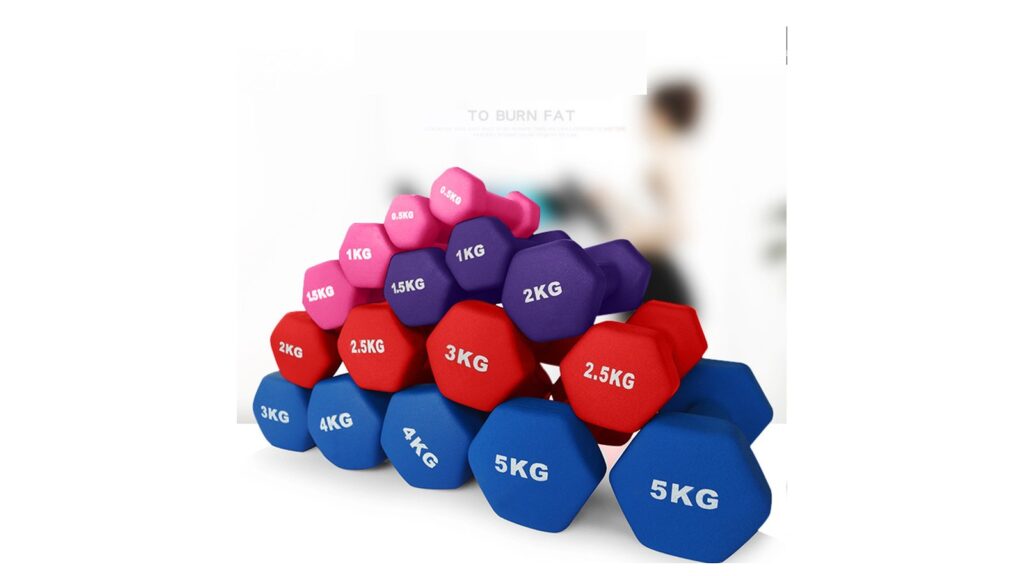
The UV13101 (1–5 kg), UV13102 (2–6 kg), UV13301 (2–10 kg), UV13302 and UV13303 (2 / 4 / 6 / 8 kg) are the color-coded, floor-friendly kettlebells you see in home gyms, group classes, and beginner programs. Their cores are sand-filled, with a soft neoprene (and on some models NBR foam) shell.
Pros: soft-touch and quiet, won’t scratch floors, color-coded for fast class pickup, and the light weight range makes them the default for home-fitness and women’s-fitness segments. The UV13201 set (6 lb × 2 + 3 lb × 2) is a ready-made retail bundle.
Cons: the sand core caps the weight range at about 10 kg, so they are a beginner/toning product, not a strength progression tool — and they are bulky for their weight, which matters for shipping.
Who stocks it: home retailers, Amazon sellers, and studio/group-training suppliers. This is your highest-turnover kettlebell line.
2. Soft kettlebells — the pound-denominated crossover
The UV13401, UV13402, and UV13403 are soft-shell neoprene kettlebells sold in pounds — 5 / 10 / 15 / 20 lb — with slightly different shell dimensions (roughly 22–24 cm diameter, 28–32 cm height) across the three models. They fill the gap between a dumbbell and a hard kettlebell: a weighted ball with a handle, used for swings, carries, and functional movement without the impact risk of cast iron.
Pros: the soft shell means no floor damage and no clanking — ideal for apartments, hotel gyms, and group classes where noise and safety matter. The pound-denomination makes them a natural fit for the US market.
Cons: the weight ceiling (20 lb ≈ 9 kg) is the same limitation as the neoprene line; they are a light-to-medium product only.
Who stocks it: US-focused resellers and anyone selling into boutique studios, hotels, and home fitness. It pairs well with the neoprene line as a complete “soft kettlebell” range.
3. Vinyl-coated cast iron kettlebells — the commercial and CrossFit anchor
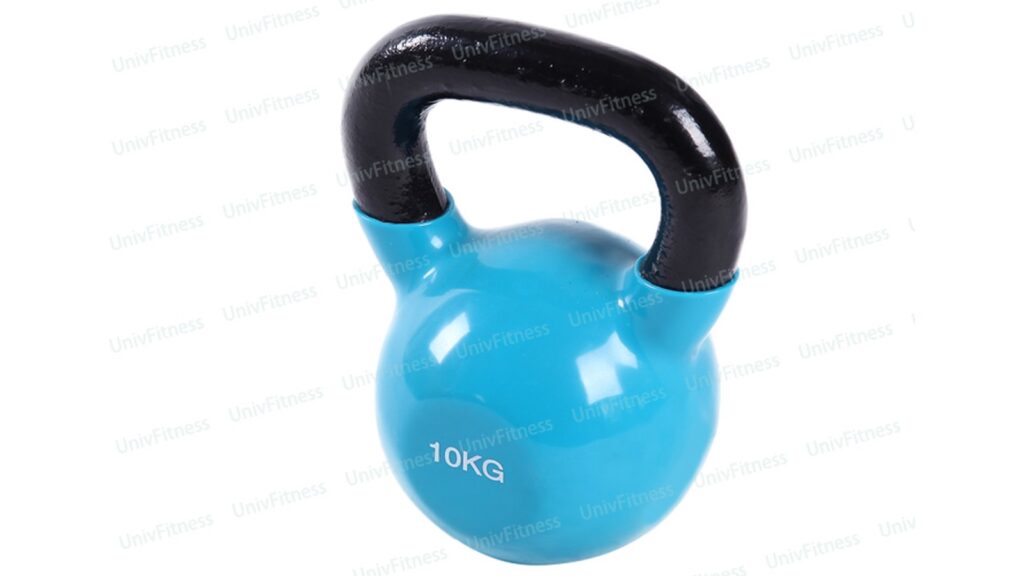
The UV12301 and UV12302 are cast-iron kettlebells with a vinyl coating, running from 4 kg up to 32 kg. This is the serious tool: a solid cast-iron core for real weight, with a vinyl skin to protect floors and resist rust.
Pros: heavy enough for genuine strength and conditioning work, durable under repeated drops, and the vinyl coating keeps it quieter and cleaner than raw cast iron. The wide 4–32 kg range means you can sell the same model to a CrossFit box (16–32 kg) and a serious home lifter (8–16 kg) from one SKU family.
Cons: heavier and more expensive to ship per unit, and the 1,000-piece MOQ is higher than the soft lines.
Who stocks it: gym-equipment distributors, CrossFit suppliers, and anyone selling into commercial fitness. This is the high-ticket anchor of your kettlebell assortment.
How to build the weight ladder your customers expect
The most common reseller mistake is ordering kettlebells in random weights. Buyers think in ladders, and the factory’s spec sheets show you the natural rungs:
- Home / studio ladder (kg): 2, 4, 6, 8 kg — covered by UV13302/UV13303, or 1–5 kg via UV13101 and 2–6 kg via UV13102.
- Home / studio ladder (lb): 5, 10, 15, 20 lb — the full UV13401/13402/13403 range.
- Commercial / CrossFit ladder (kg): 4, 8, 12, 16, 20, 24, 32 kg — covered by the UV12301/UV12302 cast-iron line.
Stock the light ladders in pairs (customers buy two), and the heavy commercial ladder in increments that let a gym build a full rack — 16 kg and 20 kg are the workhorse weights, while 8 kg and 12 kg are the women’s and technique weights. The goal is that a single customer can buy their entire progression from you, not just one bell.
Add the rack to complete the sale
A kettlebell rack turns a pile of SKUs into a package. UnivFitness offers the UV18801 three-layer kettlebell rack — steel construction, 141 × 65 × 77 cm, main tube PT40 × 80 × 2 mm, with a 100 kg maximum loading — at a low 100-piece MOQ. Sell it as the “third layer” of the order: two light bells, one heavy bell, and a rack to store them. It raises your average order value and makes the purchase feel like a complete solution for a gym or studio.
Material and quality: what to check on your sample
Whether you stock neoprene, soft, or cast-iron kettlebells, verify these points on the sample and in the factory’s inspection report (UnivFitness inspects before and after production and provides a report per order):
- Weight accuracy — a “10 kg” bell should be within a consistent, stated tolerance.
- Coating integrity — neoprene/vinyl with no bubbles, tears, or peeling at the seam where the handle meets the body.
- Handle finish — smooth and comfortable; the handle is the highest-wear point.
- Base stability — a flat, stable base so the bell sits without rocking (critical for renegade rows and goblet holds).
- Color coding — on the neoprene/soft lines, each weight should be clearly and consistently color-coded so class instructors can grab the right bell instantly.
MOQ, trade terms, and how to structure your first order
Kettlebells span three MOQ tiers at UnivFitness, which is useful for sizing your entry:
- Neoprene and soft kettlebells: 500 pcs per model.
- Vinyl-coated cast iron kettlebells: 1,000 pcs per model.
- Kettlebell rack (UV18801): 100 pcs.
The standard trade terms apply across the board — FOB Shanghai, 30-day lead time, 30% deposit with 70% before shipment, and free samples with the sample fee refunded against your bulk order. A sensible first order is 500 pieces of the neoprene line across the 2–8 kg ladder, plus a trial run of the cast-iron line at 1,000 pieces in the 8–16 kg rungs, with a few UV18801 racks — a compact container that validates both the home and commercial segments before you scale.
Bottom line: stock the three kettlebells families as one ladder — neoprene for the home and studio volume, soft for the pound-denominated US market, and vinyl-coated cast iron for the commercial and CrossFit anchor — and you cover the whole kettlebell buyer spectrum from one factory. For model specifications and factory-direct quotes on UV13101, UV13401, UV12301, and the full kettlebell range, contact lyle@univfitness.com or use the enquiry button on each product page.