If you are importing strength machines, sourcing a commercial gym package, or launching a private-label equipment brand, there is one three-letter distinction that will quietly decide whether your business makes money or gets dragged into warranty claims, returns, and liability disputes: Class S versus Class H.
Most buyers never ask about it. They compare photos, powder-coat finish, and the per-unit price on a spreadsheet. But the same-looking machine can be engineered for two completely different duty cycles — one for a private home, one for a gym that runs 14 hours a day, seven days a week.
This guide explains what EN ISO 20957 (the standard that replaced the old EN 957 series) actually says about Class S and Class H, why the difference matters to your margin, and how to verify a machine’s class before you sign a purchase order with a factory.
1. What is EN ISO 20957 (formerly EN 957)?
EN ISO 20957 is the European-harmonized family of standards for stationary training equipment. For years it was known as EN 957; the series has since been adopted and progressively renumbered as ISO 20957 and published as EN ISO 20957. When a supplier or a lab refers to “EN 957” and “EN ISO 20957,” they are generally talking about the same lineage of safety requirements.
The standard is organized around a general part plus equipment-specific parts:
| Part | Scope |
|---|---|
| Part 1 | General safety requirements and test methods — terminology, classification (usage and accuracy classes), marking, and requirements common to every machine |
| Part 2 | Strength training equipment — selectorized, cable, elastic, hydraulic, pneumatic, magnetic and plate-loaded machines |
| Part 4 | Strength training benches — flat, incline, decline and bench-press benches |
| Part 5 | Stationary exercise bikes and upper-body crank trainers |
| Part 6 | Motorized treadmills |
| Part 7 | Rowing machines |
| Part 8 | Steppers, stair climbers and climbing simulators |
| Part 9 | Elliptical cross-trainers |
| Part 10 | Exercise bikes with a fixed wheel or without freewheel |
Part 1 is the key document for buyers, because it is where every machine is assigned a usage class. (The part numbers and exact wording evolve with each edition — always confirm against the latest official standard before making a compliance claim.)
2. The three usage classes: S, H and I
EN ISO 20957-1 assigns every piece of stationary training equipment to a usage class that reflects where and how hard it is intended to be used:
- Class S (Studio / commercial). Equipment for professional and commercial use — gyms, clubs, hotels, educational establishments, and studios where access and control are regulated by the operator. Class S machines are tested to survive intensive, multi-user duty.
- Class H (Home / domestic). Equipment for private household use, with access controlled by the owner. Class H machines are engineered for light, low-frequency, few-user use.
- Class I (inclusive / professional use for people with special needs). Equipment intended for use by people with visual, hearing, physical or learning disabilities in supervised settings such as rehabilitation centres. A Class I machine must also satisfy the Class S requirements.
There is a separate set of accuracy classes — A (high), B (medium) and C (basic) — but those apply only to equipment that displays training data such as watts or speed, and they concern measurement precision, not durability. For a sourcing decision, the usage class is the one that matters.
The single most important rule: a Class H machine must not be placed in a commercial facility that is open to the public. If a member is injured on out-of-class equipment, the operator’s liability is directly engaged.
3. Class S vs Class H: the engineering reality
The distinction is not cosmetic. The same standard that defines the two classes also defines how each is tested, and the test requirements are materially different. Here is how the two classes differ in practice:
| Criterion | Class H (home) | Class S (commercial) |
|---|---|---|
| Intended setting | Private home | Gym, club, hotel, studio, public facility |
| Typical users | 1–3 household members | Unlimited, managed by the operator |
| Duty cycle | Light, a few hours a week | Intensive, many hours a day |
| Frame & structure | Lighter gauge steel | Reinforced frames, welds and bracing |
| Test loads | Reduced static/dynamic loads | Higher loads plus repeated impact tests |
| Durability testing | Fewer cycles | Multiplied cycles (often a factor of several) |
| Permitted in public-access facilities | No | Yes |
Two concrete examples from the strength-training part of the standard illustrate the gap. In EN ISO 20957-2, a Class H strength machine’s training column may be tested to a static load of roughly 4× the maximum declared load, while a Class S machine is tested to about 6× the maximum load and must also pass repeated impact tests. On the cardio side, a fixed-wheel exercise bike crank can be required to survive on the order of 120,000 cycles for Class H versus 1,000,000 cycles for Class S. These are orders of magnitude apart in accumulated stress. (Figures are indicative examples from the standard family — verify the current edition for the exact values that apply to your product type.)
In plain English: a Class S machine is built with heavier steel, stronger cable and bearing systems, and finishes designed to resist years of sweat, impact and constant re-adjustment. A Class H machine is built to be light, cheap and good enough for occasional use in a spare room.
4. The “semi-professional” trap
There is no “semi-pro” class in the standard. EN ISO 20957 recognizes S, H and I — nothing in between. Yet “semi-professional” and “pro-sumer” are everywhere in supplier marketing.
In almost every case, what the market sells as “semi-pro” is Class H home equipment with commercial-looking marketing. The buyer sees a black frame, a weight stack and a slick product page, and assumes it will hold up in a gym. It will not — or rather, it will for a while, and then it will start failing exactly when the facility is busiest.
This is the single most common sourcing mistake we see from new importers and private-label brands: buying on purchase price instead of total cost of ownership. A Class H machine placed in commercial service is cheaper up front but costs more over its life through premature replacement, unavailable spare parts and downtime. The margin you saved at the dock disappears into warranty and reputational cost.
5. Why the class matters to your liability and insurance
When you operate or resell equipment in the EU (and in many markets that align with EN standards), commercial insurance, tender documents and your own terms of sale increasingly reference the usage class. Specifically:
- Operators who put Class H machines in a public facility are exposed to liability if a member is injured on out-of-class equipment.
- Insurers may reject claims or refuse cover where equipment is used outside its certified class.
- Importers and brands who mislabel Class H product as “commercial” inherit the liability — and the chargebacks — downstream.
For a distributor or brand owner, the class is therefore not a technicality. It is a risk-management decision embedded in your product specification.
6. How to verify a machine’s class before you order
A genuine commercial supplier should be able to tell you the class in writing — not in a WhatsApp voice note, but in the specification. Before you place an order, ask for:
- The declared usage class for the exact model, stated in the data sheet, manual and machine marking.
- A certificate of conformity to EN ISO 20957 (or the relevant national/regional equivalent) naming the usage class and the parts covered.
- Load and durability test reports — static load, impact and endurance tests, not just a catalogue photo.
- What happens to the class when you customize. Your logo, color or packaging does not change the class, but a spec change (lighter steel to hit a price target) can. Confirm the class still applies to your exact configuration.
Be especially careful with low-cost quotes that do not mention a class at all. If a supplier cannot state whether a machine is Class S or Class H, treat that as a Class H until proven otherwise.
7. Sourcing Class S-style commercial equipment from UnivFitness
UnivFitness is a Chinese fitness equipment factory operating Wholesale & OEM only, and its strength catalogue is where the Class S-versus-H conversation becomes a purchase decision. The Strength & Home Gym category alone carries 772 SKUs, spanning plate-loaded and selectorized machines built for multi-user commercial duty, alongside home-oriented products.
Representative commercial strength machines in the range include:
| Model | Product | Indicative FOB wholesale price |
|---|---|---|
| UV81494B | 3D Smith Machine | ~$1,076 |
| UV80874 | 45° Linear Leg Press | ~$840 |
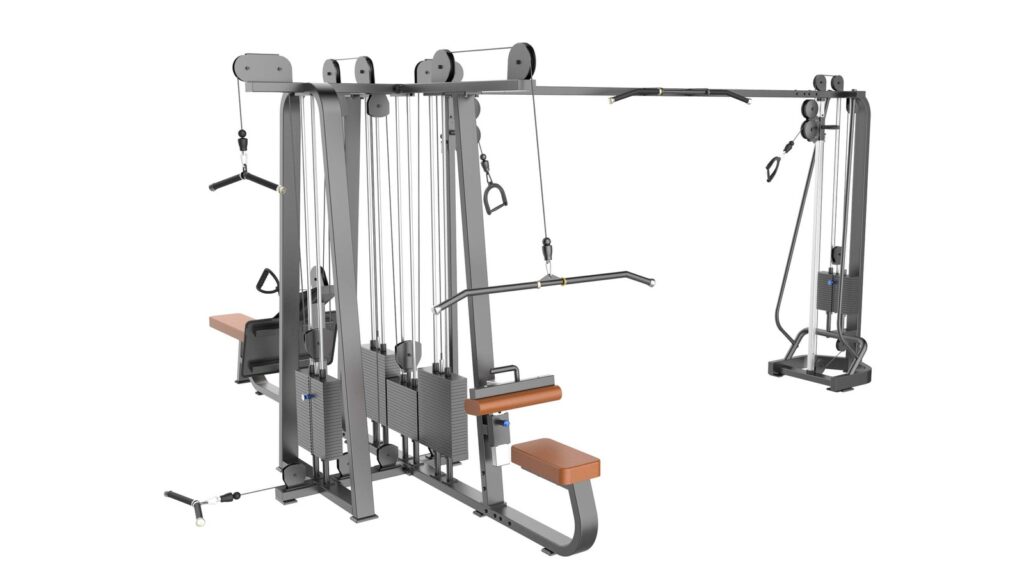
| UV81321 | 5-Station Multigym | ~$2,600 |
| UV81316 | 8-Station Multigym | ~$3,800 |
| UV81313 | Cable Crossover (jungle) machine | ~$2,200 |
| UV81241 | 45° Curl / Preacher Bench | ~$518 |
| UV81240 | 45° Arm Extension / Dip station | ~$518 |
| UV81471 | Vertical Knee Raise / Dip station | ~$240 |
(Prices are indicative FOB wholesale prices for reference only — final quotes depend on specification, quantity and current material costs.)
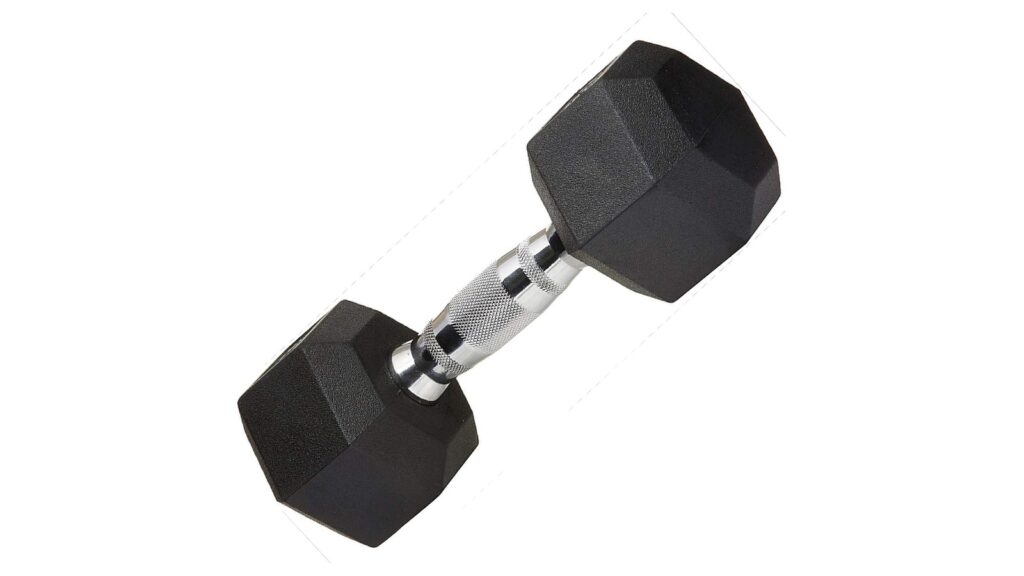
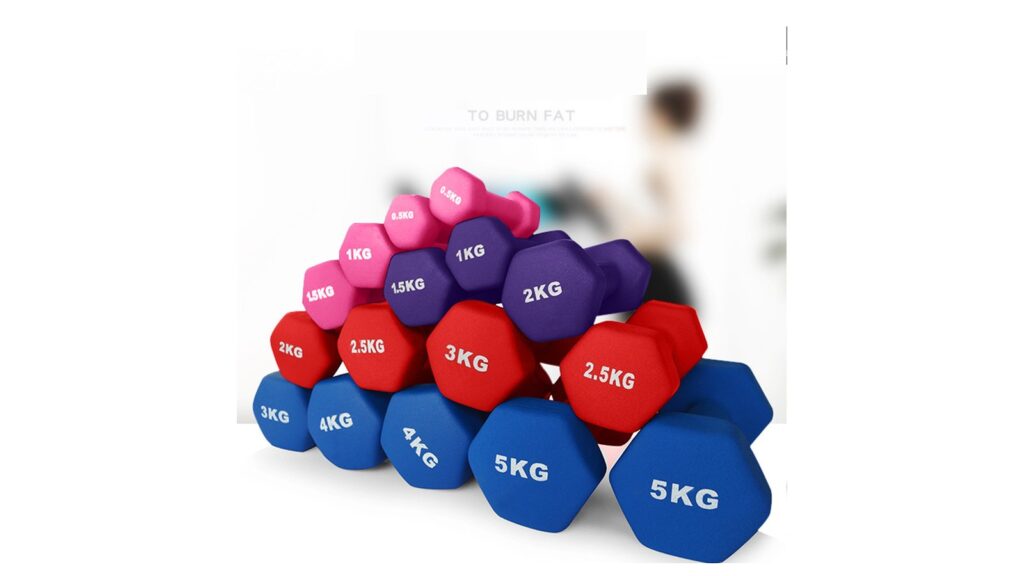
The free-weight side complements the machines for full commercial packages: cast-iron hex dumbbells (e.g. UV10601, 2.5–50 kg), rubber hex dumbbells with TPU/PEV/rubber-coated heads on chromed steel handles (UV10801, 2.5–50 kg), neoprene dumbbells (UV10201, 0.5–5 kg) and plate-loaded adjustable sets up to heavy Olympic configurations.
Because UnivFitness is a manufacturer, the class conversation is one you can have directly with the people who build the frame — not through a trading company that resells a catalogue. When you enquire, ask for the usage-class declaration and test documentation for the exact model, and confirm it survives your customization.
Trade terms that apply across the whole catalogue
- MOQ: from 1,000 pcs (category-dependent; confirm per model).
- Price term: FOB Shanghai.
- Lead time: 30 days.
- Payment: 30% advance deposit + 70% before shipment.
- Samples: free samples, with the sample fee refunded against your bulk order.
- Quality control: inspection before and after production, with a report issued for every order.
- OEM: custom colors, logos and private-label packaging. Logo application is moulded (cast iron / powder-coated products) or 1C printing (single-color, for latex / soft-surface products).
8. A quick checklist for importers and brand owners
- Decide the intended setting first (home vs commercial) — this fixes your class and your engineering budget.
- Put the usage class in writing on the purchase order, alongside model and spec.
- Request certificates and test reports naming the class, not a generic “CE-compliant” claim.
- Beware of “semi-pro” labels — there is no such class.
- Verify the class still applies after customization (logo, color, packaging, spec changes).
- Price the total cost of ownership, not the unit cost, when comparing Class S against cheap Class H imports.
Conclusion
Class S and Class H are not marketing tiers. They are two different engineering standards for two different jobs. For a home line, Class H is the right, cost-effective choice. For anything that will live in a gym, club or studio — or be resold as “commercial” — only Class S-grade design and testing will protect your customers, your insurance and your brand.
If you are planning a commercial strength line or a private-label range, talk to us before you lock the spec. Contact lyle@univfitness.com or use the Enquiry button on any product page and tell us your target market, usage setting and quantity — we will confirm the class, the specification and an accurate FOB quote.
Note: This article is for general guidance. Standards are updated periodically; always confirm the current edition of EN ISO 20957 / EN 957 and your specific national or regional requirements before relying on any compliance claim.