Two letters. One of them can clear your container through EU customs. The other can get it held, fined, or recalled.
If you import fitness equipment from China — dumbbells, kettlebells, resistance bands, yoga mats, or strength machines — you have almost certainly seen a “CE” logo on a quote sheet, a product photo, or a spec PDF. The uncomfortable question most buyers skip is: is that a real CE mark (Conformité Européenne), or the lookalike “China Export” mark?
This guide explains the difference, how to spot each one, whether your product even needs a CE mark, and what a responsible factory should actually be able to give you. Read to the end for a practical pre-shipment checklist.
1. The Real CE Mark: What It Actually Means
CE stands for Conformité Européenne — “European conformity.” It is a legal declaration, made by the manufacturer or importer, that a product meets the requirements of every EU harmonisation directive that applies to it (health, safety, and environmental protection).
Three things most buyers get wrong about CE:
- CE is not a quality mark. A CE-marked product is compliant, not necessarily premium. It is a passport to the EU market, not a badge of superiority.
- CE is a self-declaration in most cases. For lower-risk categories, the manufacturer compiles a technical file, runs (or commissions) the required tests, signs an EU Declaration of Conformity (DoC), and affixes the mark. A notified body is only involved where the directive demands it.
- CE is mandatory only for specific product categories. Not everything sold in Europe needs a CE mark. This matters a great deal for fitness equipment — we return to it in section 4.
The rules governing the mark itself are strict. Under EU Regulation (EC) No 765/2008 and the Commission’s “Blue Guide,” the CE mark must:
- Keep its official, fixed proportions when resized (you cannot stretch or redraw it freehand).
- Be at least 5 mm tall (unless a specific directive sets a different minimum).
- Be affixed visibly, legibly, and permanently — on the product itself where physically possible.
- Be accompanied by the four-digit number of the notified body wherever one was involved in assessment.
- Never sit next to another mark that could mislead anyone about what the CE mark means.
2. The “China Export” Mark: Lookalike, Not a License
The so-called “China Export” mark is a near-identical logo — the same two letters, drawn with the C and E much closer together — that is sometimes applied to goods shipped from China. It is often described as a trick to make low-cost Chinese products look EU-approved.
Is it real? The honest answer is more nuanced than most blog posts admit.
- It has no legal basis in the EU. Unlike CE, there is no European legislation, no technical file, and no Declaration of Conformity behind it. It grants zero market access.
- The European Commission has addressed it directly. In a written answer to the European Parliament (E-001996/2024, 30 November 2024), the Commission acknowledged the lookalike issue, noting that the unrelated “CE (China Export)” logo “looks almost the same as the CE marking, with the only difference that the two letters are closer together.” EU law already prohibits misleading marks, and Member States are required to enforce penalties — up to and including criminal sanctions for serious infringements.
- Some sources treat the whole thing as folklore. The skeptical view is that there was never a deliberately invented “China Export” mark, and that the tight-spaced logos people spot are simply CE marks printed with incorrect proportions. Either way, the practical conclusion is identical: a malformed or paperless CE mark is non-compliant, full stop.
For an importer, the origin story doesn’t change your exposure. If the mark on your product can’t be backed by a DoC and a technical file, it is a liability — regardless of whether the tight spacing was malice or a sloppy .ai file.
3. How to Tell Them Apart (The Five-Second Test)
Here is the practical checklist for the moment you’re looking at a product photo or a pre-production sample.
| Check | Real CE (Conformité Européenne) | “China Export” lookalike |
|---|---|---|
| Letter spacing | Clear, proportional gap between C and E; the E’s proportions follow the official grid | Letters nearly touch or overlap |
| Proportions | Fixed, per the official annex; cannot be redrawn freehand | Arbitrary, stretched, or compressed |
| Minimum size | ≥ 5 mm tall (legal minimum) | Often tiny, sized to fit a corner |
| Notified body number | 4-digit number shown beside CE when a notified body was involved | Usually absent |
| Backing documents | DoC + technical file you can request and read | Nothing verifiable |
The paperwork test beats the eyeball test every time. You are not a typeface expert, and at 5 mm the spacing is hard to judge from a photo. So stop squinting at the logo and ask for the documents. A genuine CE marking is defined by the paperwork behind it:
- EU Declaration of Conformity — a signed document identifying the product, the applicable directives/standards, and the responsible party.
- Technical file — specifications, test reports, and a risk assessment. The importer must be able to produce it for at least 10 years after the product is placed on the market.
No DoC, no technical file → treat it as non-compliant, no matter how clean the logo looks.
Note on legal accuracy: EU rules and standards change. Always confirm current requirements against the latest official texts (the Commission’s Blue Guide and your target directives) before shipping.
4. Does Your Fitness Equipment Even Need a CE Mark?
This is where most generic “CE vs China Export” articles go quiet — and where it matters most for gym equipment importers. Not all fitness equipment requires CE marking.
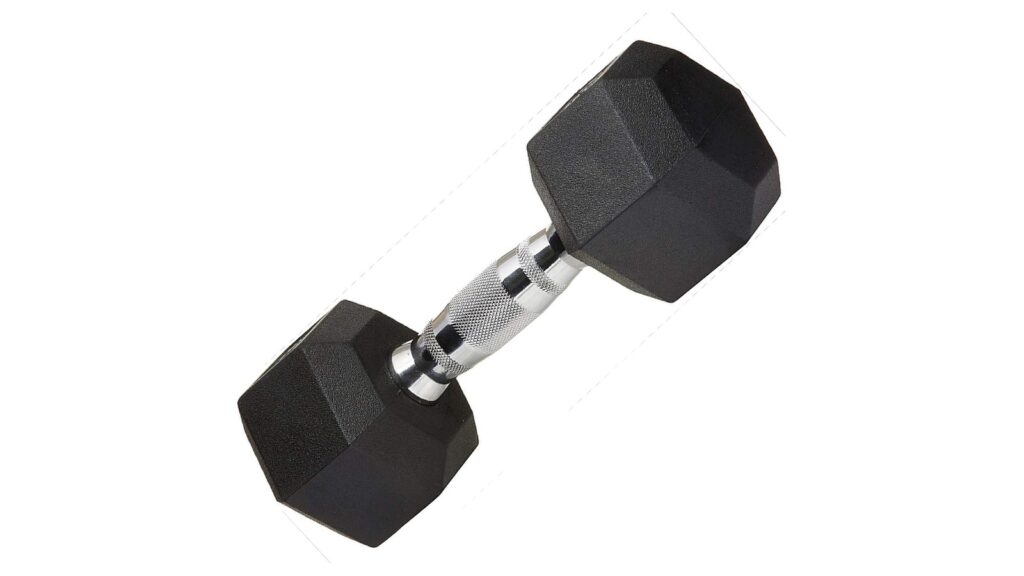
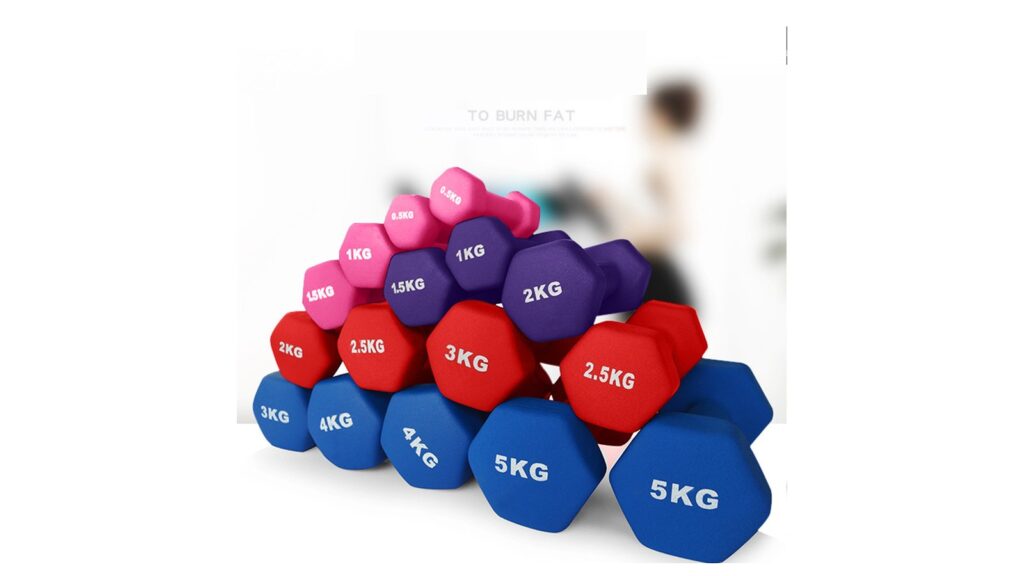
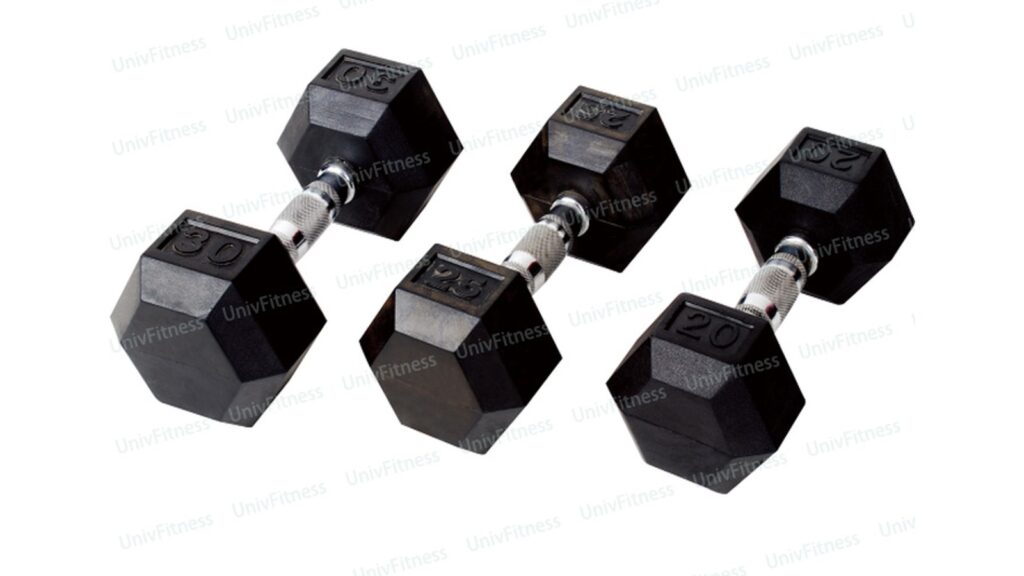
- Non-powered training equipment — dumbbells, kettlebells, barbells, resistance bands, yoga mats, foam rollers, jump ropes, slam balls, and non-motorised benches — generally does not fall under a CE-marking directive. It is regulated in the EU under the General Product Safety Regulation (GPSR, Regulation (EU) 2023/988, which replaced the older GPSD), which does not use CE marking. Compliance is demonstrated against the relevant safety standard — for stationary training equipment, EN ISO 20957 (formerly EN 957) — supported by a Declaration of Conformity to the GPSR.
- Electrically powered equipment — motorised treadmills, some ellipticals, and battery-powered devices like percussion massage guns — does typically require CE marking under the Low Voltage Directive (2014/35/EU), the EMC Directive (2014/30/EU), and RoHS (2011/65/EU) for electrical/electronic parts.
- Powered machinery with hazardous moving parts may additionally fall under the Machinery Directive (2006/42/EC).
Why this matters for your sourcing: if a supplier slaps a “CE” logo onto a set of cast-iron dumbbells and tells you it’s “CE certified,” that tells you two things — the dumbbells don’t need CE, and the supplier doesn’t understand the category deeply enough to be trusted. A genuinely experienced fitness factory knows which of its SKUs are GPSR-relevant and which are LVD/EMC-relevant, and documents them differently.
Here is how that maps onto a typical wholesale catalog:
| Product type | Example (UnivFitness) | EU regime | CE mark required? |
|---|---|---|---|
| Cast-iron hex dumbbells (2.5–50 kg) | UV10601 | GPSR + EN ISO 20957 | No (GPSR) |
| Rubber hex dumbbells (2.5–50 kg) | UV10801 | GPSR + EN ISO 20957 | No (GPSR) |
| Neoprene kettlebells (2–10 kg) | UV13301 | GPSR + EN ISO 20957 | No (GPSR) |
| Latex resistance bands | UV43101 | GPSR | No (GPSR) |
| TPE yoga mats (8 thicknesses) | UV21001 | GPSR | No (GPSR) |
| Percussion massage gun | UV21727 | LVD + EMC + RoHS | Yes |
(Model numbers and specs are from the UnivFitness catalog; EU compliance obligations sit with the importer and must be verified against current directives.)
The takeaway: ask your supplier “which directive does this product fall under?” — not “is this CE certified?” The first question filters out trading companies who just print the logo.
5. What a Responsible Factory Should Actually Provide
A factory that genuinely understands export compliance will not just point at a logo. It will offer the documentation and process that let you (the importer) complete your own conformity assessment. Look for:
- A documented QC process. Reputable fitness factories run inspection before and after production and issue a report for every order — covering materials, welding, weight tolerance, and finish. At UnivFitness this is standard on every shipment.
- Material and construction transparency. Know exactly what you’re buying: cast iron vs rubber coating vs neoprene, chrome-plated vs painted bars, TPE vs PVC vs NBR mats. The material drives which standards and tests apply.
- Third-party testing on request. For powered items or when your market requires it, the factory should support lab testing (e.g., for LVD/EMC/RoHS) — whether arranged by the factory or independently by you.
- Accurate, honest labeling. A trustworthy supplier won’t pre-print a CE mark on a product that doesn’t need one, and won’t fake one on a product that does.
What UnivFitness offers (verified from the site): wholesale & OEM only, MOQ from 1,000 pcs, FOB Shanghai, 30-day lead time, 30% advance + 70% before shipment, free samples (sample fee refunded against the bulk order), pre- and post-production inspection with a report per order, and OEM branding via moulded logos (cast-iron/powder-coated items) or 1C single-colour printing (latex/soft-surface items).
The honest framing: a factory is your production and documentation partner. The legal responsibility for placing a compliant product on the EU market ultimately rests with you, the importer — which is exactly why you need a supplier that gives you real specs and paperwork rather than a copied logo.
6. Pre-Shipment Compliance Checklist
Before you approve production, run these checks:
- Identify the applicable regime — GPSR (non-powered), LVD/EMC/RoHS (powered), or Machinery Directive (hazardous moving parts). Confirm with the factory, not the sales rep’s WhatsApp message.
- Request the Declaration of Conformity and technical file — for CE-marked items, these are non-negotiable.
- Check the mark itself — proportions, 5 mm minimum, notified-body number where required.
- Match the mark to the product — a CE mark on dumbbells is a red flag, not a bonus.
- Verify the standards — EN ISO 20957 (Class H home / Class S commercial) for stationary equipment, plus material-specific rules.
- Keep records 10 years — the importer’s retention obligation under EU product rules.
- Independent inspection — a pre-shipment inspection (SGS/BV/TÜV-style or your own QC) is cheap insurance against a logo-printing error becoming a customs hold.
7. The Bottom Line
The difference between the CE mark and the “China Export” lookalike is not really about letter spacing — it’s about whether there is a conformity assessment, a declaration, and a technical file behind the logo. Spacing is the symptom; paperwork is the test.
For fitness equipment specifically, the smarter question is whether your product falls under CE-marking directives at all. Non-powered gear lives under the GPSR and EN ISO 20957; powered gear (massage guns, motorised machines) needs LVD/EMC/RoHS CE marking. A factory that knows which is which — and documents it honestly — is worth more than any printed logo.
Sourcing fitness equipment from China and want a factory that gives you real specs, real QC, and honest compliance documentation? Contact lyle@univfitness.com, or use the Enquiry button on any product page at www.univfitness.com.