Importing fitness equipment from China is not difficult, but it is unforgiving. Freight is expensive relative to product value, cast iron is heavy, latex and TPE are bulky, and one container of the wrong mix can destroy your landed margin for the year. Most first-time importers lose money not because they chose the wrong factory, but because they ordered the wrong assortment and never calculated landed cost before signing the proforma invoice.
This guide is for wholesale buyers, importers and distributors — not home users. It covers the full sequence: mapping a catalogue, commercial terms, container planning, quality control and customs preparation. Every figure and term below comes from the live catalogue and terms of UnivFitness, a Chinese fitness equipment factory operating Wholesale & OEM Only with MOQ from 1,000 pcs.
Step 1: Map the catalogue before you email a single supplier
The most common early mistake is sending a vague RFQ — “please send catalogue and best price” — to twenty suppliers. You get twenty PDFs and no useful comparison. Instead, decide what you are buying first, then find the factory that makes it at depth.
A serious factory’s catalogue is organised by manufacturing process, because process determines tooling, MOQ and lead time. Here is the full category structure of a factory-scale Chinese supplier, with the number of products in each line:
| Category | Products in line | What it tells you about the factory |
|---|---|---|
| Strength & Home Gym | 772 | Fabrication, welding and upholstery capability — the deepest and most capital-intensive line |
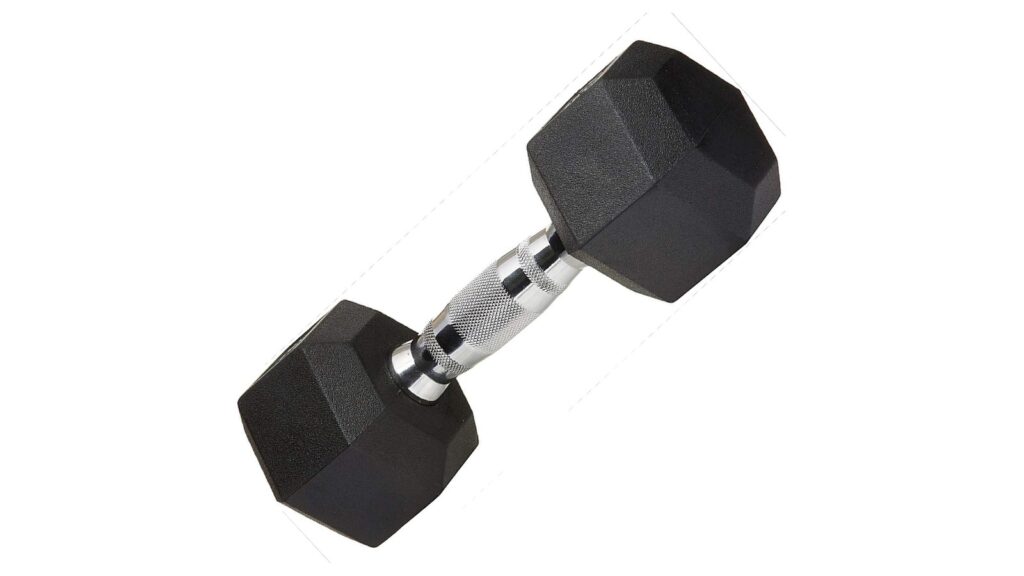
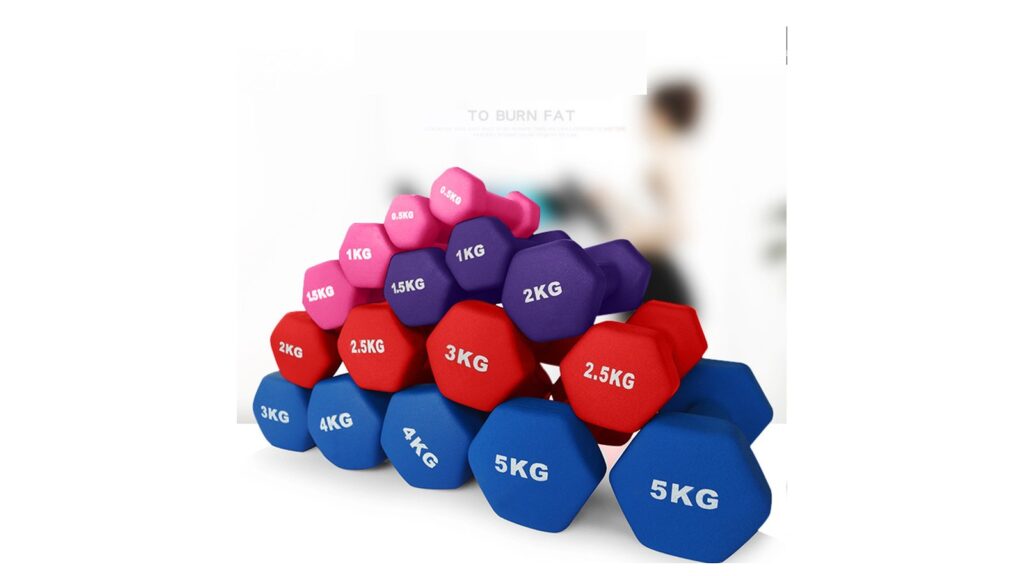
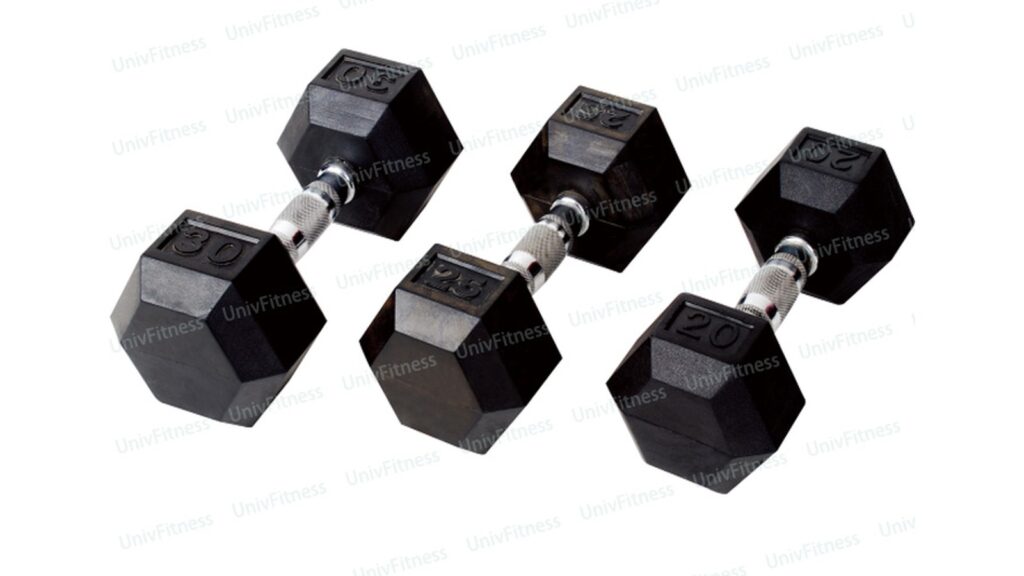
| Dumbbells & Barbells | 213 | Foundry / casting plus coating (paint, rubber, chrome, vinyl) |
| Foam Rollers & Yoga Accessories | 131 | Foam moulding and cut-and-sew |
| Yoga Mats | 82 | TPE / NBR / PVC / EVA / cork extrusion and lamination |
| Jump Ropes | 77 | Plastic injection and cable assembly |
| Resistance Bands & Tubes | 43 | Latex dipping and extrusion |
| Hand Grips | 35 | Small injection-moulded and spring assemblies |
| Gym Balls | 32 | PVC / ABS blow and rotational moulding |
| Ankle & Wrist Weights | 32 | Cut-and-sew with filler |
| Ab Rollers | 31 | Injection plus steel axle |
| Hula Hoops | 30 | Tube extrusion and forming |
| Push Up Bars | 21 | Steel tube or injection |
| Total | 1,549 SKUs | A breadth that only a manufacturer with its own tooling can carry |
Read that table as a sourcing map. If your business is free weights, you want a supplier deep in the 213-SKU dumbbell and barbell line, not one that lists four dumbbells as a side product. If you are building a home-fitness range, the 772-SKU strength line plus the 82-SKU yoga mat line gives you a credible full catalogue from one production source — which matters enormously for container consolidation later.
A practical first order is a core + filler structure: one heavy core line (dumbbells or kettlebells) that earns the freight, plus light filler (resistance bands, yoga mats, jump ropes) that uses the leftover space.
Step 2: Decide which of the three buying models you are in
Almost every enquiry is one of three things, and they have different minimums, different lead times and different price logic.
1. Catalogue wholesale. You buy existing models under the factory’s own packaging. This is the fastest route and the cheapest per unit. You need no artwork, no tooling, no approval samples. The constraint is MOQ — from 1,000 pcs on the wholesale programme.
2. Private label. Same product, your brand. Three variables change: colour, logo, packaging. Custom colours and private-label packaging are standard OEM options. The logo itself is applied by one of two processes, and which one applies depends on the material:
| Logo process | Applied to | Typical products | Why it matters to you |
|---|---|---|---|
| Mould (raised/debossed into the tooling) | Cast iron and painted surfaces | UV11101 black painted dumbbell set | Permanent, premium look; tooling is dedicated, so artwork must be locked before production |
| 1C printing (single-colour print) | Latex and soft surfaces | UV43101 latex power band, UV61501 PVC ab mat | No tooling cost, fast approval, but limited to flat artwork areas |
3. OEM development. A genuinely new specification — a new weight range, a new mould, a new material combination. This is a longer conversation and normally carries the highest MOQ, because the factory has to amortise tooling and set-up.
Be explicit in your RFQ about which model you are in. “We want UV10601 with our logo, our colour and our retail box” gets a fast, accurate quote. “We want dumbbells” does not.
Step 3: Lock the commercial terms before you talk about product
A professional factory will state its standard terms up front. If a supplier will not put terms in writing, that is itself a finding. These are the terms you should expect from a wholesale and OEM fitness equipment manufacturer:
| Term | Standard position | Why it is structured this way |
|---|---|---|
| Business model | Wholesale & OEM only; MOQ from 1,000 pcs | The factory’s production runs are sized for full containers, not parcel shipments |
| Price basis | FOB Shanghai | You control the freight and the destination charges; the factory controls the goods to the port |
| Lead time | 30 days | Measured from deposit and confirmed specification, not from first email |
| Payment | 30% advance payment, 70% before shipment | The deposit books raw material; the balance is released against inspection |
| Samples | Free samples, with the sample fee refunded on bulk order | The factory wants the order, not the sample revenue |
| QC | Inspection before and after production, with an inspection report issued for every order | Catches material defects before run, and finished defects before loading |
| OEM | Custom colours, logo, private-label packaging | Turn-key retail readiness |
Two of these deserve emphasis.
FOB Shanghai means the factory’s responsibility ends when the goods pass the ship’s rail at Shanghai. Everything after that — ocean freight, insurance, destination terminal handling, customs clearance, duty, inland delivery — is yours. That is good news, because it means you can shop freight forwarders and see the real cost of moving a container. It also means you must never compare an FOB price to a competitor’s DDP price without converting.
30% / 70% is standard for a reason. The deposit covers material buying and production scheduling; the balance is paid before shipment, typically after you have seen the inspection report. A supplier demanding 100% up front is telling you something about their confidence in the goods.
Step 4: Plan the container before you plan the order
Free weights are sold by the kilo but shipped by the cubic metre. This mismatch is where margins die. Two worked examples from real export carton data:
Heavy core: the UV11101 10 kg painted dumbbell set. Carton dimensions 101 × 87 × 98 cm, 20 pcs per carton, set weight approximately 11 kg, indicative FOB wholesale price $10.94.
- Carton volume: 1.01 × 0.87 × 0.98 = 0.861 CBM
- A 20 ft container loadable volume is roughly 28 CBM: 28 ÷ 0.861 ≈ 32 cartons
- 32 cartons × 20 pcs = 640 sets
- Approximate cargo weight: 640 × 11 kg ≈ 7,040 kg
Light filler: the UV43101 latex power band. Carton 40 × 28 × 28 cm, 5 pcs per colour card, listed unit weight 0.06 kg, indicative FOB wholesale price $1.13.
- Carton volume: 0.40 × 0.28 × 0.28 = 0.0314 CBM
- 28 CBM ÷ 0.0314 ≈ 891 cartons
- 891 × 5 = 4,455 bands
Look at what that means commercially. A 20 ft container of resistance bands is worth roughly $5,000 in FOB value; the same container of 10 kg dumbbell sets is worth roughly $7,000 and weighs several tonnes. Neither alone is optimal. Combine them: use cast iron to build value, then fill the remaining space with light, high-margin accessories whose freight cost per unit is negligible.
That is precisely why a 1,549-SKU catalogue matters. A supplier that only has dumbbells cannot help you fill the light space; one with dumbbells, yoga mats, resistance bands, jump ropes and ab rollers can build a single consolidated container with a blended landed cost that works.
For the strength line, plan differently. Machines such as the UV81494B 3D Smith machine ($1,076 indicative FOB), the UV80874 45° linear leg press ($840), the UV81313 crossover cable jungle ($2,200), the UV81321 five-station multi-gym ($2,600) and the UV81316 eight-station ($3,800) are crated and palletised rather than loosely cartoned, and packing data must be requested model by model. Never estimate machine freight from accessory freight.
Step 5: Sample properly — do not skip, do not over-sample
Standard terms are free samples with the sample fee refunded on the bulk order. Use that. A sample is not a formality; it is your only chance to verify the things a photograph cannot show:
- Weight accuracy on cast iron and cement-filled products. Weigh UV10601 cast iron hex dumbbells and UV11402 cement sets on a calibrated scale.
- Coating adhesion and odour on rubber (UV10801), neoprene (UV10208) and vinyl (UV10108) products.
- Tensile feel and surface finish on latex — stretch a UV43101 band to its working length and check for surface bloom, bubbles or inconsistent thickness across the 10 resistance levels (0.64 / 1.3 / 1.9 / 2.2 / 2.9 / 3.2 / 4.4 / 4.5 / 6.4 / 8.3 cm).
- Print or emboss quality if you are private labelling. A 1C print on UV43101 must survive stretching; a mould logo on UV11101 must be crisp and consistent across every plate.
- Packaging fit. If the product arrives in retail packaging, drop-test the packed carton.
Order samples across the full size range, not just one size. A 2.5 kg casting and a 50 kg casting from the same line can behave very differently.
Step 6: Treat QC as a contract term, not a favour
The standard commitment is inspection before and after production, with an inspection report for every order. Make that report a condition of releasing your 70% balance. Specify in the purchase order what the report must cover:
- Pre-production inspection — raw material verification, coating batch, mould condition, colour and logo sample approval.
- In-process checks — weight tolerance, weld integrity on strength equipment, thickness and density on mats.
- Final inspection — AQL sampling on finished goods, carton marking, packing list accuracy, quantity per carton.
- Loading supervision — carton count into the container, container and seal number recorded.
Ask for photographs with the report: pallet view, open carton view, product close-up, carton marking, and the container loading sequence. This costs nothing and prevents every version of “it arrived different from what I approved”.
Step 7: Verify the factory without flying there (and then fly there)
Pre-qualify a supplier from your desk first. Ask for the business licence and export record, and match the registered name to the name on the proforma invoice and the bank account. Ask for video of the specific production line for your product, not a showroom walkthrough. Then ask a question only a maker can answer: what coating grades exist for UV10801 (rubber / TPU / PEV), what the handle construction is (chromed steel), what bar diameters are offered on UV11101 (25 / 28 / 30 mm). A trader reads a catalogue; a factory answers from the line. Check category depth too — a supplier claiming 772 strength products should discuss welding, tube gauge and upholstery without hesitation — and ask for two references in your market.
Then, once the relationship is real, visit. Nothing replaces seeing the casting line, the coating line and the packing floor in person.
Step 8: Prepare for customs before the container sails
Customs is where timelines slip, not at the factory. Prepare in advance:
- Commercial invoice, packing list, bill of lading — the packing list must match the physical container, carton by carton.
- HS classification per product family. Fitness equipment is classified by material and function, and duty rates differ by classification and destination; free weights, latex bands, yoga mats and gym machines do not fall under one code. Confirm with a licensed customs broker before you price the order.
- Country of origin marking, plus material content labelling where required for textile-adjacent goods such as neoprene and ankle weights.
- Market compliance — labelling language, warning text, and consumer-safety marking where applicable.
- Insurance. Under FOB, risk passes at the port, so insure the shipment yourself.
Budget landed cost as a full stack, not product plus freight: FOB value, ocean freight, insurance, destination terminal handling, clearance fee, duty and tax, inland delivery, plus a few percent contingency for demurrage or inspection holds.
Step 9: The mistakes that cost importers the most
- Ordering one product line only. Only light goods wastes the weight allowance; only cast iron wastes space and may hit the payload cap.
- Comparing FOB to DDP. Convert to landed cost at your warehouse before comparing quotes.
- Skipping the specification sheet. “10 kg set” is not a specification — UV11101 is 1.25 kg × 2 + 2.5 kg × 2 with a 350 mm chromed bar, spring collars and 25 / 28 / 30 mm bar options; UV11302 is 1 kg × 4 + 2 kg × 2 with star collars.
- Paying 100% up front. Standard is 30% advance, 70% before shipment, released against inspection.
- Ignoring lead-time triggers. Thirty days starts at deposit and confirmed specification.
- Not sampling across the size range.
- Changing artwork after production starts. A mould logo cannot be changed mid-run; a 1C print can, but only before the plate is set.
Frequently asked questions
Is the 1,000-piece MOQ per model or per order?
Stated as MOQ from 1,000 pcs on the wholesale programme. Where a model carries a different figure — UV61501 at 500 pcs, UV21108 cork-TPE mat at 1,004 pcs — that figure applies to the model. Mixed-SKU consolidation is normally possible within one order; get the rule in writing.
Can I get free samples before committing?
Yes — free, with the sample fee refunded on the bulk order.
When does production start?
Thirty days runs from deposit and confirmed specification, not from your first email.
Start your import programme with real numbers
The difference between a profitable import programme and an expensive hobby is landed-cost arithmetic done before the order, on real carton data, with a factory that will state its terms in writing.
UnivFitness is a Chinese fitness equipment manufacturer operating Wholesale & OEM Only across 13 categories and more than 1,500 SKUs — 213 dumbbell and barbell products, 772 strength and home gym products, 82 yoga mats and 43 resistance band products. Standard terms: FOB Shanghai, 30-day lead time, 30% advance / 70% before shipment, free samples with the fee refunded on bulk order, inspection before and after production with a report on every order, plus custom colours, logo and private-label packaging.
Send your target models, quantities, artwork and destination port to lyle@univfitness.com, or use the Enquiry button on each product page, and you will receive carton data, CBM calculation and an indicative FOB quotation you can build a landed-cost model on.