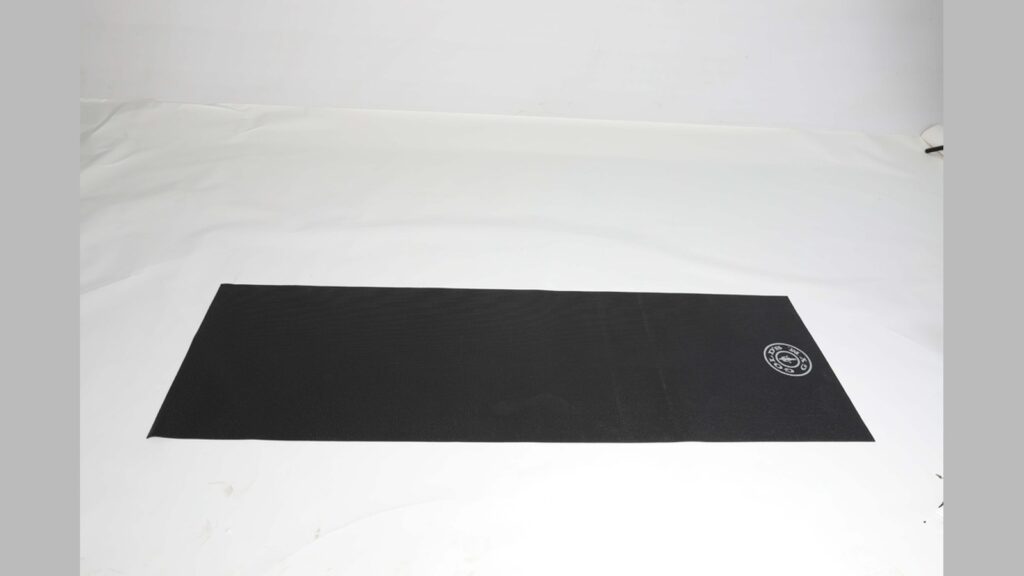
“What thickness is best?” is the most common question yoga mat buyers ask, and the honest answer is that there is no single best thickness — there is a best thickness per use case, and a most profitable thickness per channel. A 0.14cm travel mat and a 1.5cm NBR floor mat are both correct products; putting either one in the wrong channel is what loses money.
UnivFitness (www.univfitness.com) is a China-based fitness equipment factory supplying wholesale and OEM only, with 82 models in the Yoga Mats category. This guide uses the actual thickness steps we produce — from 0.14cm to 1.5cm — to build a thickness selection framework you can apply to your own assortment.
—
Why Thickness Governs Performance
Thickness controls three things that customers feel immediately:
- Joint cushioning. More thickness means more material between knee, spine or wrist and the floor. This is the primary purchase driver for home and beginner users.
- Stability. More thickness means more compression under the foot or hand, which destabilises standing and balance postures. This is why experienced practitioners and studio operators often prefer thinner mats.
- Portability and storage. Thickness drives rolled diameter and weight, which drive freight cost, shelf footprint and whether the customer can carry the mat.
The trade-off is simple: cushioning goes up with thickness, stability goes down. Every recommendation in this guide is an argument about where on that curve your customer sits.
—
The Thickness Ladder, Mapped to Real Models
| Thickness band | UnivFitness models | Material | Typical positioning |
|---|---|---|---|
| Ultra-thin: 0.14–0.33cm | UV20711 (0.14 / 0.33cm), UV20712 (0.2cm foldable) | PVC + suede, PVC | Travel mat, studio over-mat, commuter |
| Thin: 0.3–0.5cm | UV21001 (0.3 / 0.4 / 0.5cm), UV21003 (from 0.4cm), UV20708 (0.4 / 0.5cm), UV20719 (0.3cm) | TPE, PVC + PU, PVC cork-print | Balance work, hot yoga over-mat, freight-sensitive retail |
| Mid: 0.6cm | UV21007, UV21008, UV21009, UV20904, UV20717, UV20708 (0.6cm) | TPE, NBR, PVC | The general-purpose default |
| Standard: 0.7–1.0cm | UV21001 (0.7 / 0.8 / 0.9 / 1.0cm), UV21002, UV21003, UV21006, UV21108, UV20901, UV20906, UV20701, UV20703, UV20715 | TPE, cork + TPE, NBR, PVC | Retail mainstream and studio bulk |
| Thick: 1.2–1.5cm | UV20903 (1.2 / 1.5cm) | NBR | Home fitness, floor work, gym stretching zones |
Note the concentration: 0.6cm and 1.0cm are the two busiest steps in the catalogue. That is not an accident — they are the two thicknesses that satisfy the most customers. If you are building a minimal range, start there.
—
Thickness by Use Scenario
| Use scenario | Recommended thickness | Recommended model | Reasoning |
|---|---|---|---|
| Vinyasa / flow yoga (home) | 0.6–0.8cm | UV21001 at 0.6 or 0.8cm | Enough cushion for knees, still stable for standing sequences |
| Hot yoga / Bikram | 0.3–0.5cm, suede or cork top | UV20711 (0.14 / 0.33cm) or UV21009 (0.6cm suede) | Thin mats plus a towel-like surface; moisture improves grip |
| Pilates | 1.0–1.5cm | UV20903 at 1.2 or 1.5cm | Floor-based work demands spine and hip cushioning |
| HIIT and bodyweight circuits | 1.0cm+ | UV20903 at 1.0 or 1.2cm, or UV20901 | Impact absorption matters more than balance precision |
| Yoga studio (class sets) | 0.6–1.0cm, uniform | UV21008 bound edge (0.6cm) or UV20906 edge-sewn (1.0cm) | Edge finishing survives daily handling and cleaning |
| Gym floor / stretching zone | 1.0–1.5cm | UV20903 at 1.5cm | Functions as matting; durability over precision |
| Travel and commuting | 0.14–0.33cm | UV20711 or UV20712 (foldable, 0.2cm) | Packs flat or folds; minimal volume |
| Outdoor and park | 0.8–1.0cm, camo | UV21003 (camo, 0.4–1.0cm) or UV20715 (1.0cm) | Thicker to handle uneven ground |
| Children and schools | 1.0cm+ | UV20901 at 1.0cm, 1050–1200g grade | Soft under impact; easy to wipe |
| Studio over-mat (hygiene layer) | 0.14–0.33cm | UV20711 | Sits on top of a studio mat; cheap to replace |
—
Thickness by Procurement Scenario
The same thickness means different things depending on who is buying. This is where most buyers mis-specify.
| Procurement scenario | Recommended thickness | Why | Suggested models |
|---|---|---|---|
| Mass retail / supermarket | 0.6cm and 1.0cm, two steps only | Two clear price points; shopper decides by feel | UV21001 at 0.6 and 1.0cm |
| Cross-border e-commerce | 0.4–0.6cm | Parcel shipping bills weight; thinner mats protect margin | UV21001 at 0.4 / 0.5cm, UV20708 at 0.4cm |
| Amazon FBA | 0.6cm | Balance of review satisfaction and dimensional weight | UV21007 or UV21008 at 0.6cm |
| Studio / institutional wholesale | 1.0cm, uniform, edge-finished | Daily handling; replacement cycle matters more than unit cost | UV20906 (1.0cm, 1000/1300g), UV21008 |
| Hotel, corporate wellness, gifting | 0.3–0.6cm, premium finish | Perceived quality and aesthetics over cushioning | UV20708 (0.4/0.5/0.6cm), UV21108 (1.0cm cork + TPE) |
| Promotional / volume giveaway | 0.3–0.5cm | Lowest material content per unit | UV21001 at 0.3cm, EVA UV20801 ($1.48 indicative FOB wholesale price) |
| Specialty premium retail | 1.0cm cork or suede | Story-driven purchase; thickness reads as quality | UV21108 ($11.48 indicative FOB wholesale price), UV21009 |
—
Thickness Is Not Weight: The Two-Axis Rule
The most common spec error buyers make is ordering “1.0cm” and assuming they know what they are getting. At 1.0cm, our published weight options span a very wide range:
| Model | Material | Thickness | Published weight options |
|---|---|---|---|
| UV21002 | TPE two-colour | 1.0cm | 700 / 860 / 1000 / 1120 / 1280 / 1420 / 1520g |
| UV21108 | Cork + TPE | 1.0cm | 400 / 550 / 700 / 850 / 970 / 1130 / 1270 / 1370g |
| UV20901 | NBR | 1.0cm | 800 / 900 / 1050 / 1200g |
| UV20906 | NBR, edge-sewn | 1.0cm | 1000 / 1300g |
| UV20701 | PVC honeycomb | 1.0cm | 800 / 900 / 1050 / 1250 / 1400 / 1550 / 1700g |
| UV20703 | PVC printed | 1.0cm | 1580 / 1680 / 1790 / 1900 / 2000g |
At the same 1.0cm thickness, UV21002 TPE is available from 700g to 1,520g — a spread of more than 2×. That is the difference between a light mat that a customer carries easily and a dense mat that feels like equipment.
The rule: always specify thickness AND weight grade. Thickness tells the customer what they feel under their knees; weight tells you what you pay to ship and how durable the mat is. A 1.0cm mat at 700g and a 1.0cm mat at 1,520g are two different products wearing the same label.
—
Thickness, Roll Diameter and Freight
Thickness is the single biggest driver of packed volume in a mat program:
- Rolled diameter grows with thickness and length. A 0.15cm mat and a 1.5cm mat of the same length do not differ by 10× in rolled diameter, but the difference is large enough to change how many units fit a carton. Always confirm the rolled diameter and carton pack quantity with the factory before you fix your retail carton.
- Thickness × density = shipped weight. PVC UV20703 at 1.0cm reaches 2,000g; TPE UV21002 at 1.0cm tops out at 1,520g. On a 1,000-piece order that is the difference between 2,000kg and 1,520kg of product weight — 480kg, before packaging.
- Thin mats win on parcels, thick mats win on pallets. If your cost is billed per parcel, push thickness down to 0.4–0.6cm. If you move pallets or full containers, thickness costs you less per unit and buys you a better-feeling product.
Practical planning sequence: fix the thickness from the use-scenario table, then choose the lowest weight grade that still feels acceptable in hand, then confirm carton quantity and rolled diameter, then quote.
—
Thickness-Specific Quality Checks
Thickness is also the most commonly disputed specification at inspection, because foam compresses and measurement method changes the reading. UnivFitness carries out inspection before and after production, with an inspection report per order. For thickness specifically, agree these points before production starts:
- Measurement method and tolerance — where on the mat thickness is measured (centre, edges, corners) and the acceptable tolerance band, stated in the order.
- Uniformity across the sheet — thin spots at the edges are the usual cause of “the mat feels cheap” complaints.
- Weight against the ordered grade — weigh finished mats and compare to the specified grade (for example, UV21008 at 800g or 1000g).
- Lay-flat behaviour — thin mats especially must unroll flat without curl; bound-edge constructions (UV21008) and edge-sewn NBR (UV20906) are the mitigation.
- Compression recovery — after load, the mat returns toward its specified thickness rather than taking a permanent set.
—
Building a Thickness Ladder for a Three-Tier Range
Tier 1 (entry, 0.4–0.6cm). UV21001 at 0.4cm or 0.5cm, or UV20708 at 0.4/0.5cm for a PU-finished look. Purpose: lowest landed cost, wins the price search, works for parcel shipping.
Tier 2 (mainstream, 0.6–1.0cm). UV21001 at 0.6cm and 1.0cm, or UV21007/UV21008 at 0.6cm if you want alignment lines or bound edges. This is where the volume and the margin both live — two steps, one artwork.
Tier 3 (premium, 1.0cm+ with surface story). UV21108 cork + TPE at 1.0cm (indicative FOB wholesale price $11.48, MOQ 1,004 pcs, eight weight grades from 400g to 1,370g) or UV21009 suede at 0.6cm. Purpose: brand ceiling; gives studios and specialist retailers a reason to engage.
Specialist add-ons: UV20903 at 1.2 or 1.5cm for Pilates, home fitness and gym stretching zones — an NBR thick tier that no TPE mat competes with on cushion-per-kilogram; UV20712 foldable at 0.2cm for travel retail.
—
Trade Terms (Standard Across the Site)
| Term | Detail |
|---|---|
| Business model | Wholesale & OEM only, MOQ from 1,000 pcs |
| Incoterm | FOB Shanghai |
| Lead time | 30 days |
| Payment | 30% advance + 70% before shipment |
| Samples | Free samples; sample cost refunded against the bulk order |
| Quality control | Inspection before and after production, inspection report per order |
| Contact | lyle@univfitness.com |
OEM covers custom colours, private-label packaging, and logo application — 1C printing on soft-surface products such as UV21108, UV43101 and UV61501, and mould logo on cast iron and painted metal products such as UV11101.
—
Frequently Asked Questions
Is 6mm or 10mm better for general yoga?
6mm (0.6cm) for stability-focused practice and travel; 10mm (1.0cm) for home users, Pilates and anyone with knee or wrist sensitivity. Stock both — they are the two busiest steps in our range.
What thickness do studios buy?
Usually 1.0cm in a uniform colour, with an edge-finished construction: UV20906 (edge-sewn NBR, 1.0cm, 1000/1300g) or UV21008 (bound-edge TPE, 0.6cm, 800/1000g).
What is the thinnest mat available?
UV20711 in PVC + suede at 0.14cm, and UV20712 foldable PVC at 0.2cm — both positioned as travel or studio over-mats.
What is the thickest?
UV20903 NBR at 1.5cm, alongside steps at 0.8 / 1.0 / 1.2cm.
Does thickness affect MOQ?
No. MOQ is from 1,000 pcs across the range; UV21108 is specified at 1,004 pcs. What thickness affects is weight grade, freight and unit price.
—
Specify Your Thickness Ladder
Tell us the thickness steps, weight grades, materials and packaging you need, and we will quote a defined specification — thickness and weight grade both stated, so what you approve is what ships.
Send an inquiry to lyle@univfitness.com or use the Enquiry button on each product page.